
How to Help a Puppy Sleep Through the Night
The first nights with a new puppy can be challenging. Many puppies cry, whine, or wake up frequently during the night, leaving new owners exhausted and wondering what went wrong. If you’re searching for how to help a puppy sleep through the night, you’re not alone—this is one of the most common concerns among new dog owners.
Puppies are adjusting to a completely new environment. They’ve just left their mother and littermates, and suddenly they’re sleeping in an unfamiliar place. This transition can feel confusing and even a little scary for them.
The good news is that with the right bedtime routine and training habits, most puppies learn to sleep through the night surprisingly quickly. In this guide, you’ll learn:
- why puppies wake up during the night
- how to help a puppy sleep through the night step by step
- practical bedtime routines that work
- common mistakes that disrupt puppy sleep
- helpful tools that support better sleep
With patience and consistency, peaceful nights for both you and your puppy are absolutely possible.
Disclosure: As Amazon Associates, we earn from qualifying purchases at no extra cost to you.
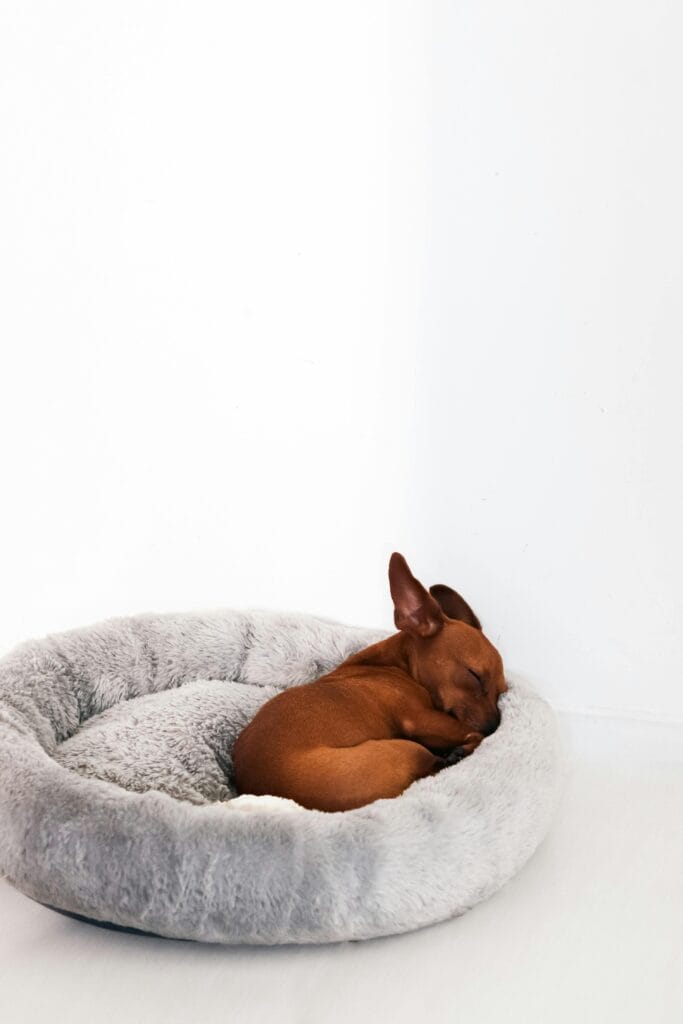
Why Puppies Wake Up at Night
Before learning how to help a puppy sleep through the night, it helps to understand why puppies wake up in the first place.
Young puppies have smaller bladders and shorter sleep cycles than adult dogs. They may wake up because they:
- need a bathroom break
- feel lonely or anxious
- have too much energy before bedtime
- are adjusting to a new environment
- are uncomfortable or overstimulated
Most puppies begin sleeping longer stretches at night as they grow and become comfortable with their routine.
How to Help a Puppy Sleep Through the Night
Learning how to help a puppy sleep through the night involves creating a calm bedtime routine and helping your puppy feel safe and relaxed before sleep.
Follow these steps to build a healthy nighttime routine.
Step 1: Create a Consistent Bedtime Routine
Dogs thrive on routine, and bedtime is no exception.
A simple evening schedule might include:
- light playtime or a walk
- a final potty break
- calm interaction
- bedtime in the sleeping area
Repeating the same pattern every night helps your puppy understand that it’s time to sleep.
Consistency helps puppies feel secure.
Step 2: Provide Enough Exercise During the Day
Puppies that have excess energy often struggle to settle at night.
Make sure your puppy receives:
- daily walks (age appropriate)
- interactive play sessions
- training exercises
- mental stimulation
Physical and mental activity helps puppies feel naturally tired when bedtime arrives.
Step 3: Schedule a Final Potty Break
One of the most common reasons puppies wake up is the need to use the bathroom.
Take your puppy outside:
- immediately before bedtime
- calmly and quietly
- without stimulating play
This reduces the chance of nighttime accidents.

Step 4: Create a Comfortable Sleeping Space
Your puppy should have a cozy place to sleep.
Common options include:
- a crate
- a dog bed near your bed
- a designated sleeping area
Young puppies often feel safer when sleeping near their owner, especially during the first weeks.
A comfortable sleeping space encourages relaxation.
Step 5: Keep Nights Calm and Quiet
If your puppy wakes up during the night, keep interactions calm and brief.
Avoid:
- playing
- bright lights
- excited talking
Simply take the puppy outside for a potty break if needed, then return them to their sleeping area.
This helps reinforce that nighttime is for sleeping.

Helpful Tools That Can Improve Puppy Sleep
This article contains affiliate links. As an Amazon Associate, we earn from qualifying purchases.
While training and routine are the most important factors, a few simple tools can help puppies feel more relaxed at night.
Calming Dog Bed
A calming dog bed provides warmth and comfort, helping puppies feel secure.
Benefits include:
- soft supportive materials
- a cozy nesting design
- reduced anxiety
These beds often help puppies settle more quickly at bedtime.
Puppy Crate
A crate can create a safe sleeping environment.
Benefits include:
- preventing nighttime wandering
- supporting house training
- providing a den-like sleeping space
When introduced properly, many puppies feel safer sleeping in a crate.
Soft Comfort Toy
Some puppies benefit from having a soft toy in their sleeping area.
This can provide:
- comfort during adjustment to a new home
- a sense of companionship
- something gentle to cuddle with

Practical Tips for Better Puppy Sleep
Small adjustments to your puppy’s daily routine can make nighttime much easier.
Keep Evening Activities Calm
High-energy play right before bedtime can make it harder for puppies to relax.
Try calming activities like:
- gentle play
- quiet training
- relaxed interaction
This signals that bedtime is approaching.
Avoid Late Meals
Feeding too late in the evening can increase nighttime bathroom needs.
Try feeding your puppy:
- several hours before bedtime
This helps their digestion settle before sleep.
Use Gentle Background Noise
Some puppies relax with quiet background sounds.
Soft music or white noise can reduce stress from unfamiliar nighttime sounds.
Common Mistakes That Disrupt Puppy Sleep
Avoiding these mistakes can help your puppy adjust to nighttime faster.
Letting the Puppy Sleep All Day
If a puppy sleeps too much during the day, they may have excess energy at night.
Balanced activity during the day encourages better nighttime sleep.
Responding Immediately to Every Whine
Some puppies whine briefly while settling down.
If you immediately respond to every sound, your puppy may learn that whining brings attention.
Give your puppy a moment to settle before intervening.
Changing the Sleeping Area Frequently
Consistency is important.
Moving the sleeping area around the house can confuse puppies and slow their adjustment.
Overstimulating the Puppy Before Bed
Exciting games late at night can increase energy levels and make it harder for puppies to relax.
Conclusion
Learning how to help a puppy sleep through the night requires patience, routine, and a calm bedtime environment. Puppies are adjusting to a new home, and with consistent habits they quickly begin feeling secure and comfortable.
By creating a predictable bedtime routine, providing enough daytime activity, and offering a comfortable sleeping space, most puppies begin sleeping longer stretches within a few weeks.
Remember that nighttime training is a process. With consistency and gentle guidance, your puppy will soon develop healthy sleep habits that lead to peaceful nights for both of you.
FAQ
At what age do puppies start sleeping through the night?
Many puppies begin sleeping through the night between 12 and 16 weeks of age, depending on bladder control and routine.
Why does my puppy cry at night?
Puppies may cry because they feel lonely, need a potty break, or are adjusting to a new environment.
Should I ignore my puppy crying at night?
If your puppy has recently gone to the bathroom and is safe, brief whining may stop on its own. However, persistent crying may signal a need.
Is it better for puppies to sleep in a crate?
Many puppies sleep well in crates because they feel safe in small enclosed spaces.
How long does nighttime training take?
Most puppies adjust to sleeping through the night within a few weeks with consistent routines.
You may also like: