How to Train a Dog Not to Jump on People
If your dog jumps on guests, strangers, or even family members, you’re not alone. Jumping is one of the most common behavior problems dog owners face. The good news is that learning how to train a dog not to jump on people is easier than many owners think when you use consistent training and clear communication.
Dogs usually jump because they’re excited and want attention. Unfortunately, what feels like friendly enthusiasm to your dog can be uncomfortable or even dangerous for people, especially children or elderly visitors.
The key to solving the problem is teaching your dog a better way to greet people. In this guide, you’ll learn:
- why dogs jump on people
- how to train your dog to greet politely
- simple step-by-step training methods
- common mistakes owners make
- helpful tools that can support training
With patience and consistency, most dogs can learn calm greeting behavior within a few weeks.
Disclosure: As Amazon Associates, we earn from qualifying purchases at no extra cost to you.
Why Dogs Jump on People
Before training begins, it’s helpful to understand why dogs jump in the first place.
Most dogs jump because:
- they’re excited to see someone
- they want attention
- they learned jumping gets results
- they haven’t learned a better greeting behavior
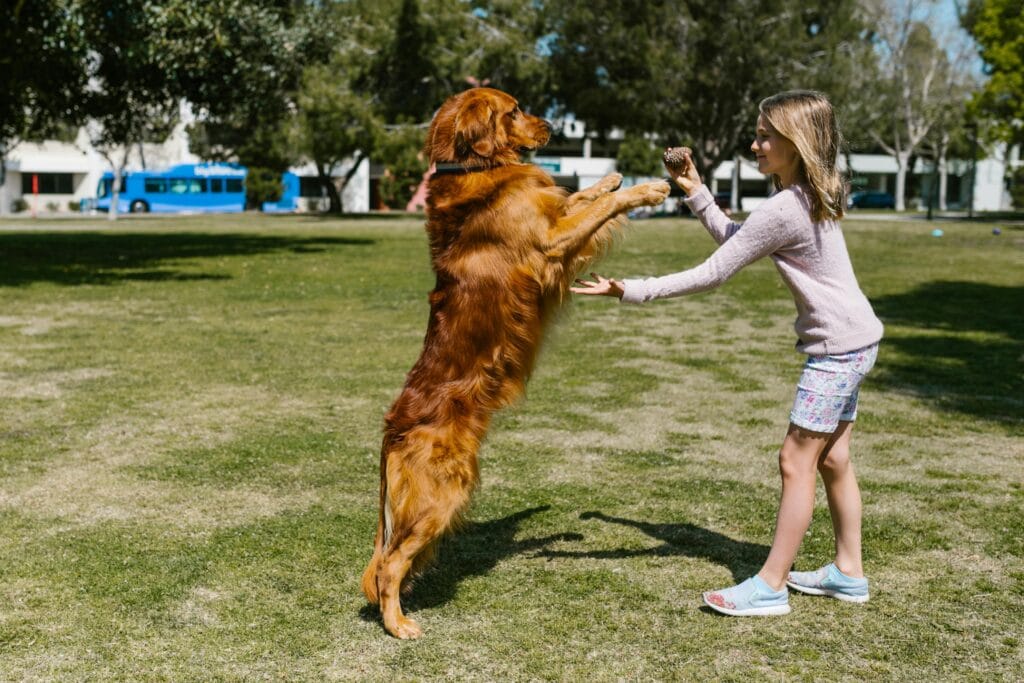
Dogs naturally greet face-to-face. Since humans are taller, jumping helps them reach your face.
The problem happens when owners accidentally reinforce jumping by:
- petting the dog while it jumps
- talking to the dog excitedly
- pushing the dog away (which can feel like play)
Even negative attention can reward the behavior. The goal of training is to reward calm greetings instead of jumping.
How to Train a Dog Not to Jump on People
Learning how to train a dog not to jump on people involves teaching your dog that calm behavior gets attention while jumping gets ignored.
Follow these steps consistently.
Step 1: Ignore the Jumping Behavior
The first rule of training is simple: no attention for jumping.
When your dog jumps:
- Turn your body away
- Avoid eye contact
- Stay silent
- Wait until all four paws are on the floor
The moment your dog stops jumping, reward them with calm attention.
Dogs quickly learn that jumping stops interaction while calm behavior earns rewards.
Step 2: Reward Calm Greetings
Positive reinforcement speeds up training.
Whenever your dog approaches someone calmly:
- praise them
- pet them gently
- give a small treat
This teaches your dog that keeping paws on the ground leads to rewards.
Consistency is extremely important. Everyone in your household should follow the same rule.
Step 3: Teach an Alternative Behavior
Instead of simply stopping jumping, teach your dog a new greeting behavior.
Common alternatives include:
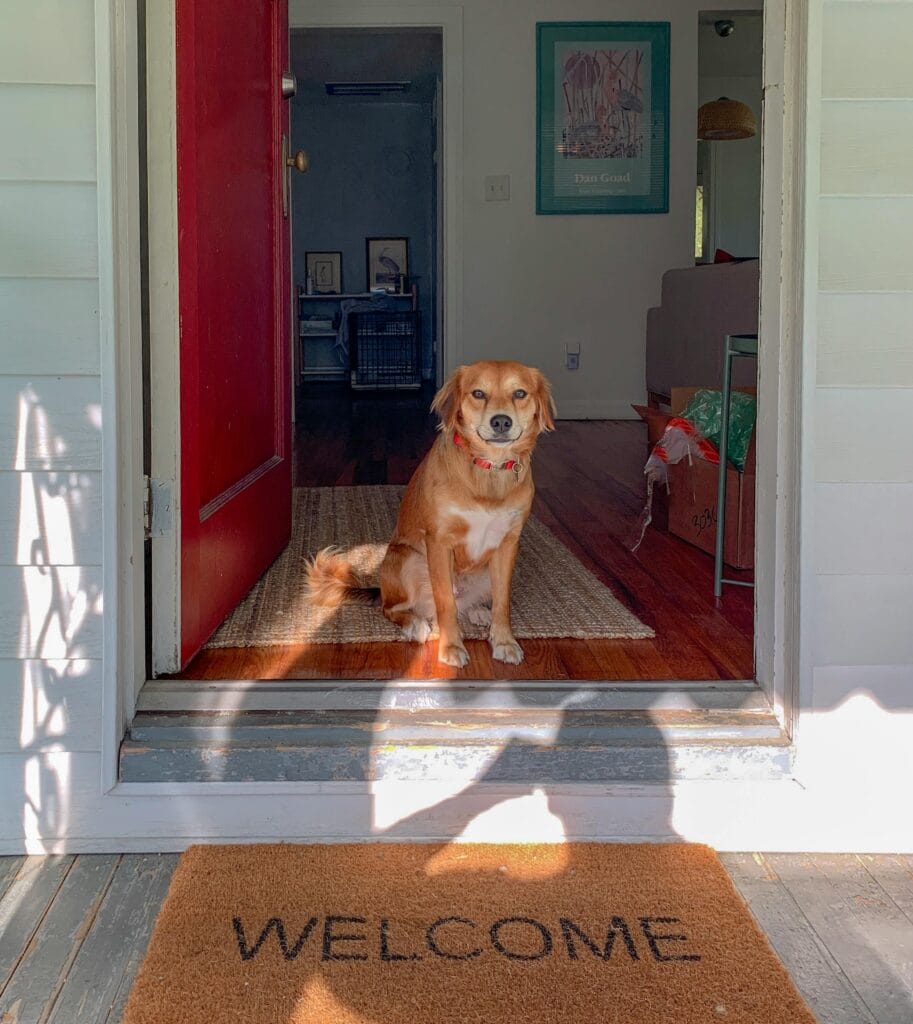
- sitting when greeting people
- standing calmly
- waiting at the door
For example, teach the sit command:
- Ask your dog to sit when someone approaches
- Reward the sit immediately
- Only allow greeting after sitting
Dogs learn that sitting politely is the fastest way to get attention.
Step 4: Practice With Visitors
Training works best when practiced in real situations.
Ask friends or family members to help with controlled training sessions.
When someone enters:
- Ask your dog to sit
- If the dog jumps, the visitor turns away
- If the dog stays calm, the visitor gives attention
After a few practice sessions, most dogs start understanding the pattern.
Step 5: Stay Consistent Every Time
Inconsistent responses confuse dogs.
For example:
- if one person allows jumping
- but another person corrects it
the dog won’t understand the rule.
Make sure everyone interacting with your dog follows the same training approach.
Consistency is the fastest way to stop jumping behavior.
Helpful Tools That Can Support Training
This article contains affiliate links. As an Amazon Associate, we earn from qualifying purchases.
While training is the most important factor, a few tools can make the process easier for dog owners.
Dog Training Clicker
A dog training clicker can help mark the exact moment your dog performs the correct behavior.
Benefits include:
- clearer communication during training
- faster learning for many dogs
- consistent positive reinforcement
Clicker training works especially well when teaching calm greeting behaviors.
Treat Training Pouch
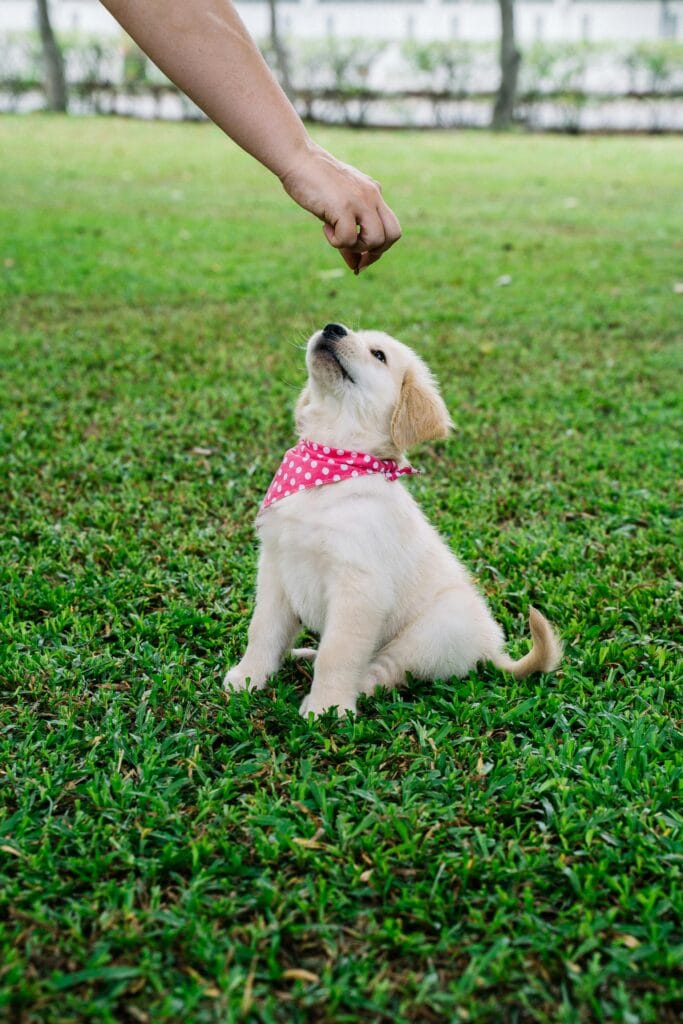
A training treat pouch helps you reward your dog quickly.
Quick rewards are important because dogs learn best when the reward happens immediately after the correct behavior.
A pouch allows you to:
- access treats quickly
- keep hands free during training
- avoid fumbling when rewarding your dog
Interactive Puzzle Toys
Some dogs jump because they have excess energy.
Puzzle toys provide mental stimulation and reduce boredom, which can help prevent overly excited greetings.
Practical Tips for Faster Training
Stopping jumping behavior usually takes consistent practice. These tips can speed up progress.
Keep Greetings Calm
Excited greetings encourage jumping.
Instead:
- speak calmly
- move slowly
- reward calm behavior
Your dog will mirror your energy.
Exercise Your Dog Before Guests Arrive
A tired dog is less likely to jump.
Before visitors arrive:
- take your dog for a walk
- play fetch
- provide a short training session
This helps reduce excess excitement.
Reward Good Behavior Often
Many owners forget to reward calm behavior.
Whenever your dog greets someone politely:
- give praise
- offer treats
- show gentle attention
Dogs repeat behaviors that earn rewards.
Common Mistakes Dog Owners Make
Avoiding these mistakes will help training work faster.
Accidentally Rewarding Jumping
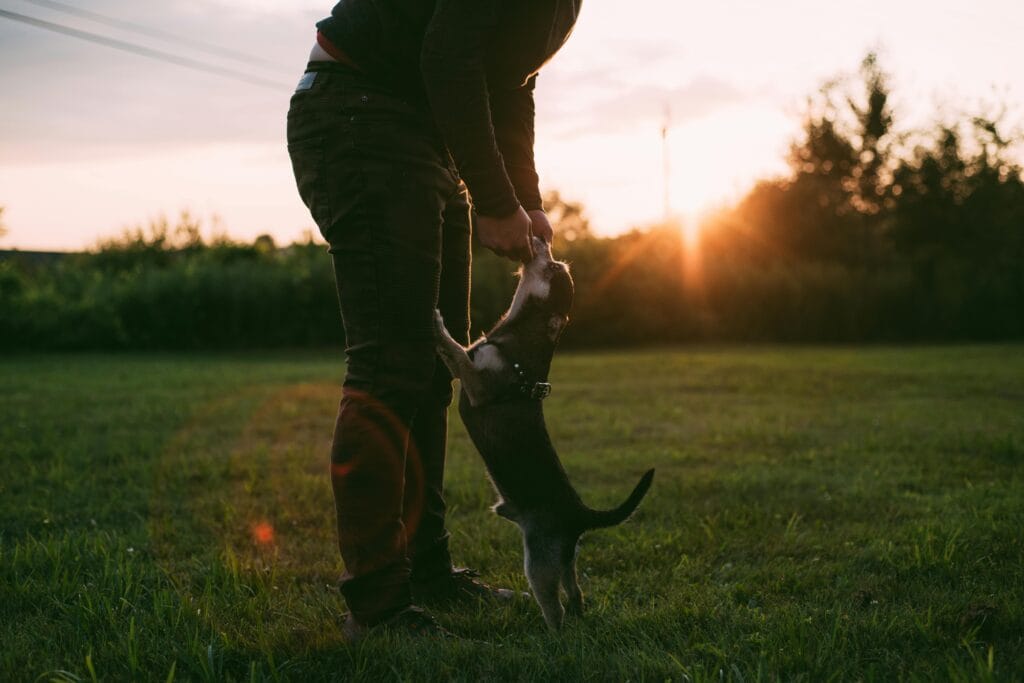
Even pushing your dog away can feel like play.
If you give any attention while the dog jumps, the behavior may continue.
Always ignore jumping completely.
Yelling at the Dog
Shouting often increases excitement rather than correcting behavior.
Calm, consistent responses work much better.
Inconsistent Training
If some family members allow jumping while others don’t, training becomes confusing.
Make sure everyone follows the same rules.
Expecting Instant Results
Training takes repetition.
Most dogs begin improving within 1–3 weeks when training is consistent.
Conclusion
Learning how to train a dog not to jump on people is mostly about teaching your dog that calm greetings earn attention while jumping does not.
By ignoring jumping, rewarding calm behavior, and teaching an alternative greeting like sitting, you can help your dog develop better manners around guests and strangers.
Consistency is the key to success. With daily practice, patience, and positive reinforcement, most dogs learn polite greeting habits surprisingly quickly.
Not only will this make your dog easier to manage, but it will also make visits with friends and family much more enjoyable for everyone involved.
FAQ
Why does my dog jump on people when greeting them?
Most dogs jump because they are excited and want attention. Jumping allows them to reach a person’s face, which is how dogs naturally greet.
How long does it take to stop a dog from jumping on people?
With consistent training, many dogs show improvement within 1–3 weeks. However, full habit changes may take several weeks.
Should I push my dog down when it jumps?
No. Pushing a dog down can accidentally feel like play or attention. Ignoring the jumping behavior works better.
Do puppies grow out of jumping behavior?
Not usually. Without training, many dogs continue jumping into adulthood because the behavior becomes a habit.
Can older dogs learn not to jump?
Yes. Dogs of any age can learn new behaviors through positive reinforcement and consistent training.
You may also like: