How to Teach Your Dog Basic Commands
Teaching your dog basic obedience is one of the most important parts of responsible pet ownership. If you’re learning how to teach your dog basic commands, you’re building the foundation for good behavior, safety, and better communication with your dog.
Basic commands such as sit, stay, come, and down help dogs understand expectations and improve their ability to respond in everyday situations. Whether you’re training a young puppy or an older dog, consistent training can dramatically improve behavior.
The good news is that teaching basic commands doesn’t require complicated techniques. With patience, positive reinforcement, and short daily sessions, most dogs can learn basic obedience quickly.
In this guide, you’ll learn the essential commands every dog should know, step-by-step training methods, helpful tips, and tools that make the training process easier.
Disclosure: As Amazon Associates, we earn from qualifying purchases at no extra cost to you.
Why Basic Dog Training Is Important
Before learning how to teach your dog basic commands, it helps to understand why obedience training matters.
Basic commands help dogs:
- stay safe in different environments
- develop impulse control
- reduce behavioral problems
- build trust with their owner
- improve focus and communication
Dogs that understand basic commands are often calmer, easier to manage, and more confident in new situations.
How to Teach Your Dog Basic Commands
Training works best when broken down into simple steps. Dogs learn faster when training sessions are short, consistent, and positive.
Step 1: Choose a Quiet Training Environment
Start training in a calm place where your dog can focus.
Good locations include:
- inside your home
- a quiet backyard
- a low-distraction park area
Reducing distractions helps your dog learn new commands faster.
Step 2: Use Positive Reinforcement
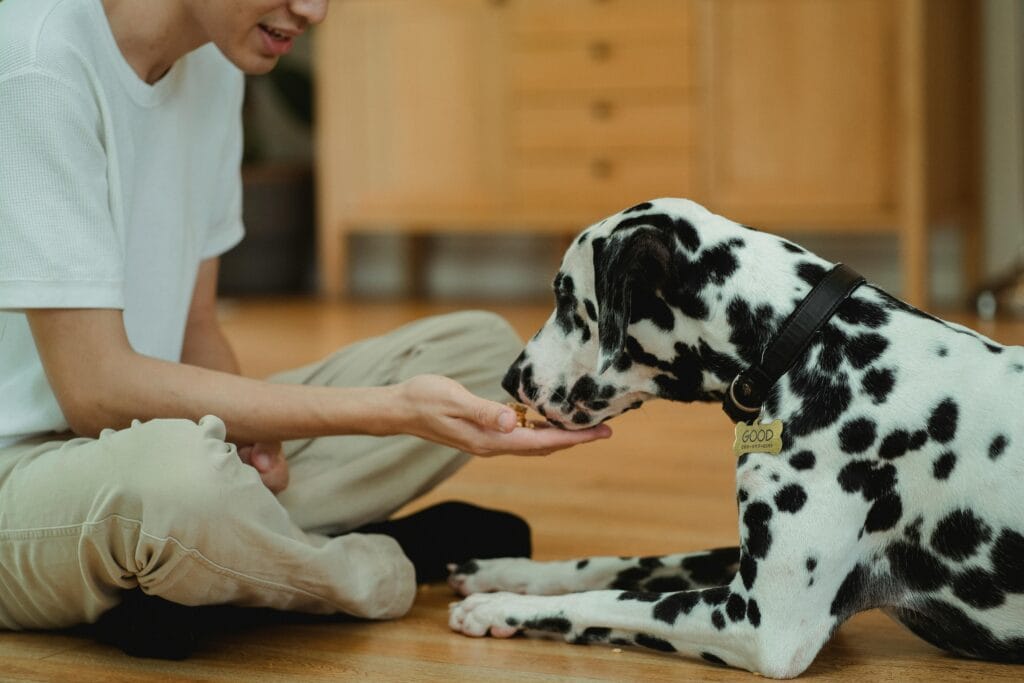
Positive reinforcement is one of the most effective training methods.
When your dog performs the desired behavior:
- give praise
- offer a small treat
- use an enthusiastic tone
Dogs repeat behaviors that lead to rewards.
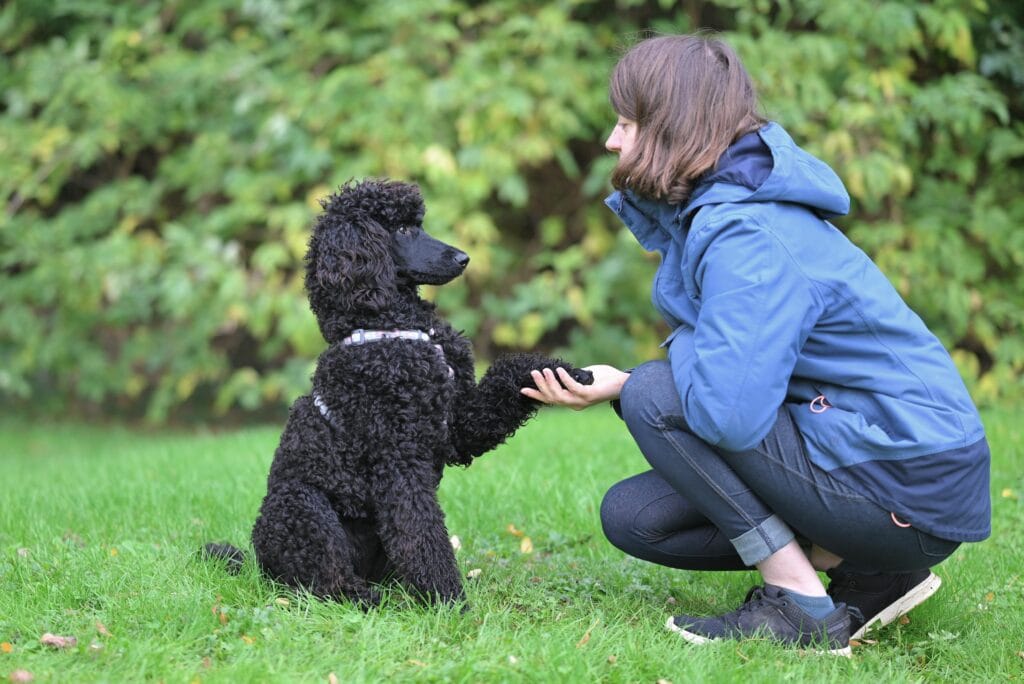
Step 3: Teach One Command at a Time
Avoid teaching too many commands at once.
Focus on one command until your dog understands it clearly before moving to the next.
Common beginner commands include:
- Sit
- Stay
- Come
- Down
Mastering these basic commands builds the foundation for more advanced training.
Essential Basic Commands to Teach Your Dog
Here are the most important commands every dog should learn.
Sit
The sit command is often the first command dogs learn.
Steps:
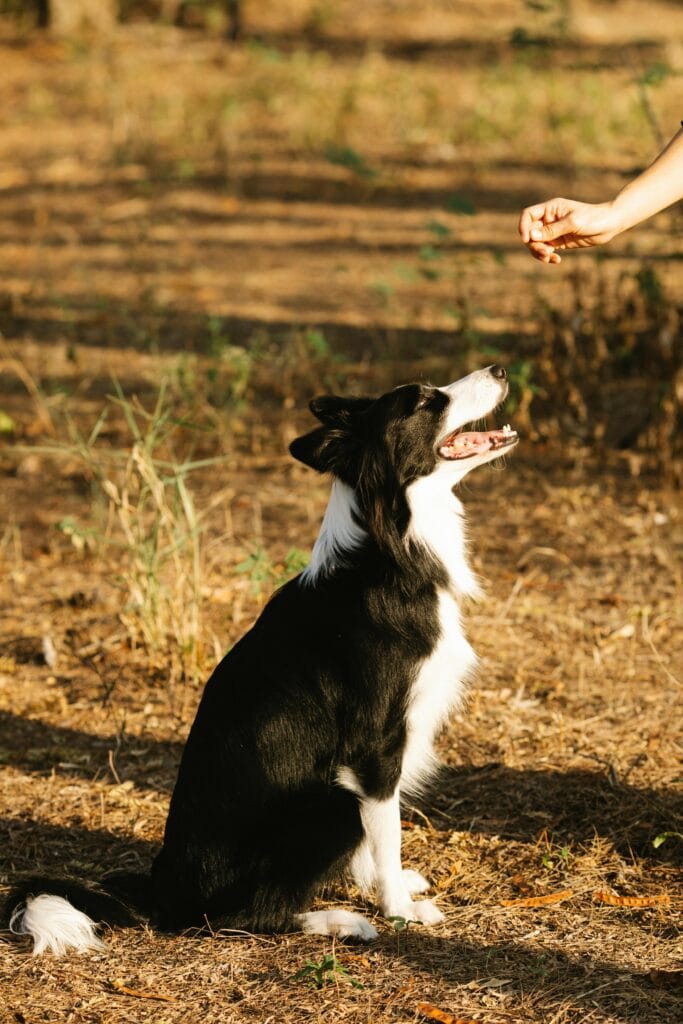
- Hold a treat near your dog’s nose
- Move the treat upward slowly
- As your dog’s head follows the treat, their bottom will lower
- Once they sit, say “Sit” and reward immediately
Stay
The stay command helps build patience and impulse control.
Steps:
- Ask your dog to sit
- Raise your hand and say “Stay”
- Take one step back
- Reward if your dog remains still
Gradually increase distance and duration.
Come
The recall command keeps your dog safe in outdoor situations.
Steps:
- Say your dog’s name followed by “Come”
- Use a happy voice
- Reward immediately when your dog approaches
Practice frequently in different environments.
Down
Teaching your dog to lie down encourages calm behavior.
Steps:
- Ask your dog to sit
- Lower a treat toward the floor
- Guide your dog into a lying position
- Reward once they lie down

Helpful Training Tools
This article contains affiliate links. As an Amazon Associate, we earn from qualifying purchases.
Certain tools can make obedience training easier and more effective.
Dog Training Treats
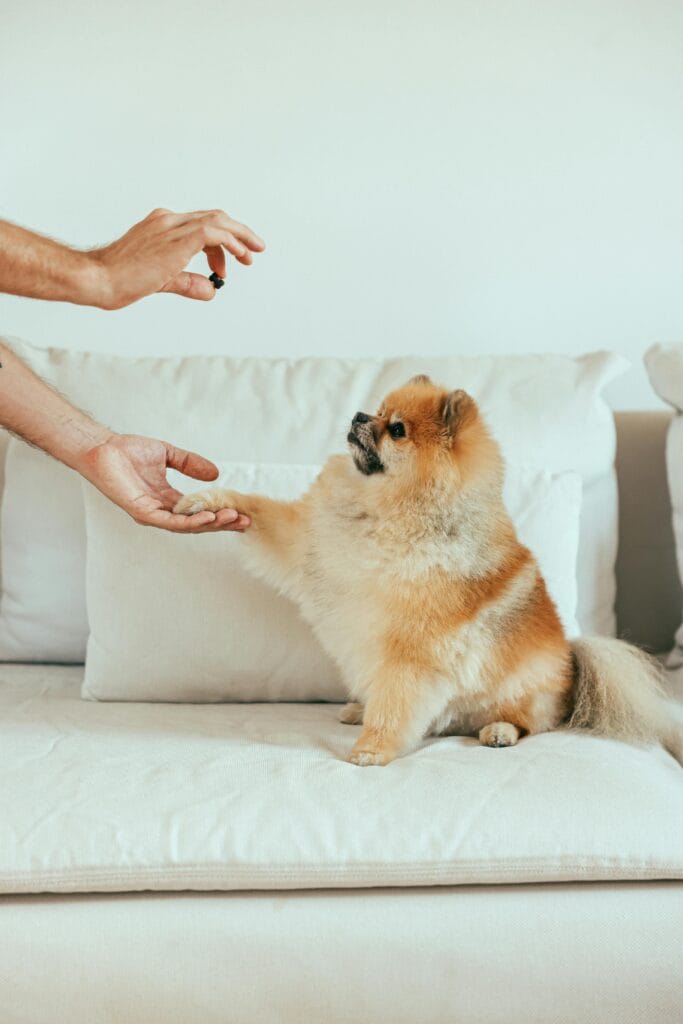
Small treats are useful for rewarding correct behavior quickly.
Example product:
Full Moon Essential Beef Savory Bites
These treats are commonly used for training because they are small and easy to give frequently.
Dog Training Clicker
Clicker training helps mark the exact moment your dog performs the correct behavior.
Example product:
Dog Training Clicker
The click sound acts as a clear signal that the dog did something right.
Practical Tips for Successful Dog Training
These tips can make learning basic commands much easier.
Keep Training Sessions Short
Dogs learn best with short sessions.
Try:
5–10 minutes
2–3 times per day
This keeps your dog focused and motivated.
Be Consistent
Use the same command words and hand signals every time.
Consistency helps dogs understand what you expect.
Practice Daily
Daily practice strengthens learning and builds habits.
Reward Calm Behavior
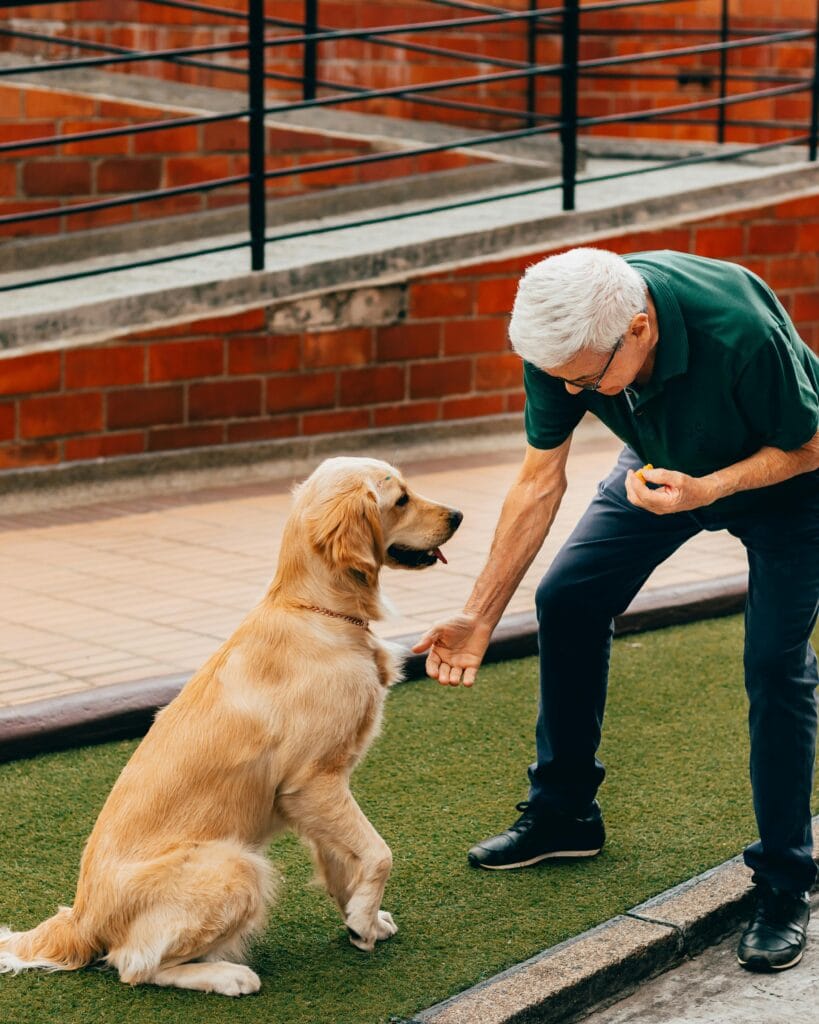
Dogs should associate training with positive experiences.
Common Dog Training Mistakes
Avoid these common mistakes when teaching basic commands.
Repeating Commands Too Often
Saying a command repeatedly can confuse your dog.
Instead, give the command once clearly.
Training Too Long
Long sessions can lead to frustration and loss of focus.
Using Punishment
Punishment can cause fear and slow learning.
Positive reinforcement works much better.
Skipping Practice
Dogs need repetition to understand commands fully.
Conclusion
Learning how to teach your dog basic commands is one of the best ways to build a strong relationship with your dog while encouraging safe and polite behavior. Commands like sit, stay, come, and down provide the foundation for good obedience and make everyday situations easier to manage.
With patience, consistency, and positive reinforcement, most dogs can learn basic commands quickly. By practicing regularly and rewarding success, you’ll help your dog become a confident, well-behaved companion.
Training doesn’t need to be complicated—simple daily practice can lead to lasting results and a happier life for both you and your dog.
FAQ
What are the first commands every dog should learn?
The most important beginner commands are sit, stay, come, and down.
How long does it take to teach basic commands?
Many dogs begin learning commands within a few days, but reliable obedience may take several weeks of consistent training.
Can older dogs learn basic commands?
Yes. Dogs of any age can learn basic commands with patience and consistent training.
How often should I train my dog?
Short sessions of 5–10 minutes, two or three times daily, are usually most effective.
Should I always use treats during training?
Treats are helpful during early training stages but can gradually be replaced with praise once the behavior is learned.
You may also like: