How to Choose the Right Puppy Toys
Choosing toys for a new puppy might seem simple, but many dog owners quickly realize that not all toys are safe, durable, or appropriate for young dogs. If you’re wondering how to choose the right puppy toys, you’re making an important decision that affects your puppy’s safety, development, and behavior.
Puppies explore the world through their mouths. Chewing, biting, and playing are natural behaviors that help them learn, relieve teething discomfort, and burn off energy. However, the wrong toys can break easily, become choking hazards, or fail to keep your puppy mentally stimulated.
The good news is that with a few simple guidelines, you can choose toys that are both fun and beneficial for your puppy.
In this guide, you’ll learn:
- how to choose the right puppy toys for safety and development
- the types of toys puppies benefit from most
- practical tips for safe playtime
- common toy mistakes new dog owners make
- helpful products that support healthy play
With the right toys, playtime becomes a safe and positive part of your puppy’s daily routine.
Disclosure: As Amazon Associates, we earn from qualifying purchases at no extra cost to you.

Why Puppy Toys Are Important
Before learning how to choose the right puppy toys, it helps to understand why toys play such an important role in puppy development.
Toys provide more than just entertainment. They help puppies develop physically and mentally.
Benefits of puppy toys include:
- relieving teething discomfort
- encouraging healthy chewing habits
- preventing boredom
- supporting mental stimulation
- strengthening the bond between puppy and owner
Without appropriate toys, puppies often redirect their chewing to household items like furniture, shoes, or electrical cords.
Providing suitable toys helps guide natural behaviors in a safe direction.
How to Choose the Right Puppy Toys
Learning how to choose the right puppy toys involves considering safety, durability, and your puppy’s age and chewing habits.
Follow these steps when selecting toys for your puppy.
Step 1: Choose the Right Size Toy
Toy size matters more than many owners realize.
Toys that are too small may become choking hazards, while toys that are too large may be difficult for a puppy to carry or chew.
The ideal toy should be:
- large enough to prevent swallowing
- small enough for your puppy to grip easily
Always check toy size recommendations for your puppy’s breed and age.
Step 2: Look for Durable Materials
Puppies can chew surprisingly hard, especially during teething.
Choose toys made from durable materials such as:
- thick rubber
- reinforced fabric
- strong nylon
Avoid toys that break easily or contain small detachable parts.
Durable toys last longer and reduce the risk of choking.
Step 3: Consider Teething Relief
Most puppies go through a teething phase between 3 and 6 months of age.
During this time, their gums may feel sore or itchy.
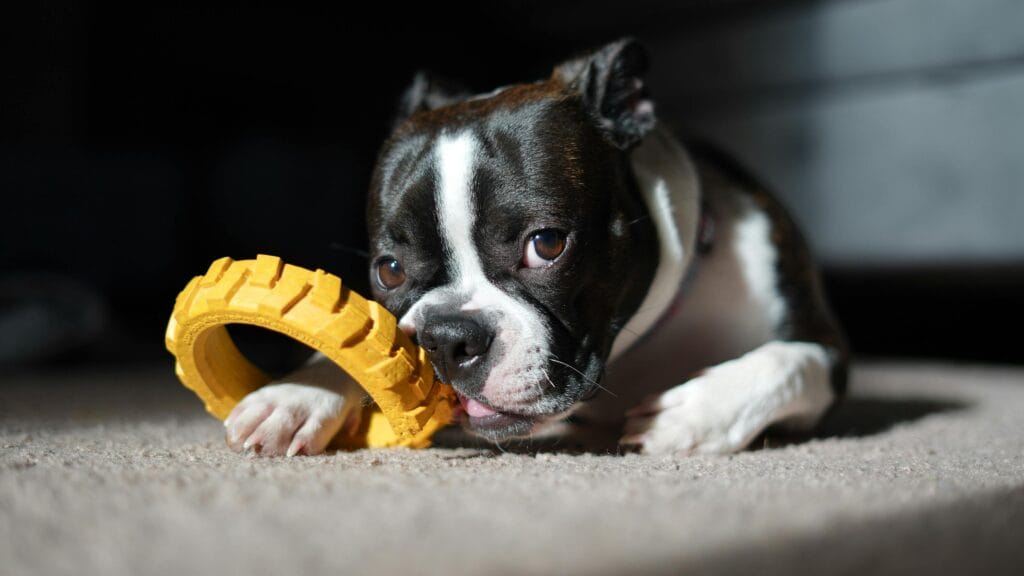
Teething toys can help by:
- soothing gums
- reducing chewing on furniture
- satisfying the urge to chew
Rubber chew toys or toys that can be cooled in the refrigerator often provide extra comfort.
Step 4: Include Interactive Toys
Interactive toys challenge your puppy mentally.
Examples include:
- treat-dispensing toys
- puzzle toys
- toys that move or roll
These toys encourage problem-solving and prevent boredom, especially when your puppy is alone.
Mental stimulation is just as important as physical exercise.
Step 5: Rotate Toys Regularly
Puppies can lose interest in toys if they are always available.
Toy rotation helps keep playtime exciting.
Try:
- giving your puppy a few toys at a time
- storing the rest out of sight
- rotating toys every few days
This simple trick keeps toys feeling new and engaging.
Helpful Products That Support Healthy Play
This article contains affiliate links. As an Amazon Associate, we earn from qualifying purchases.
Certain types of toys and accessories can help provide safe and stimulating playtime for puppies.
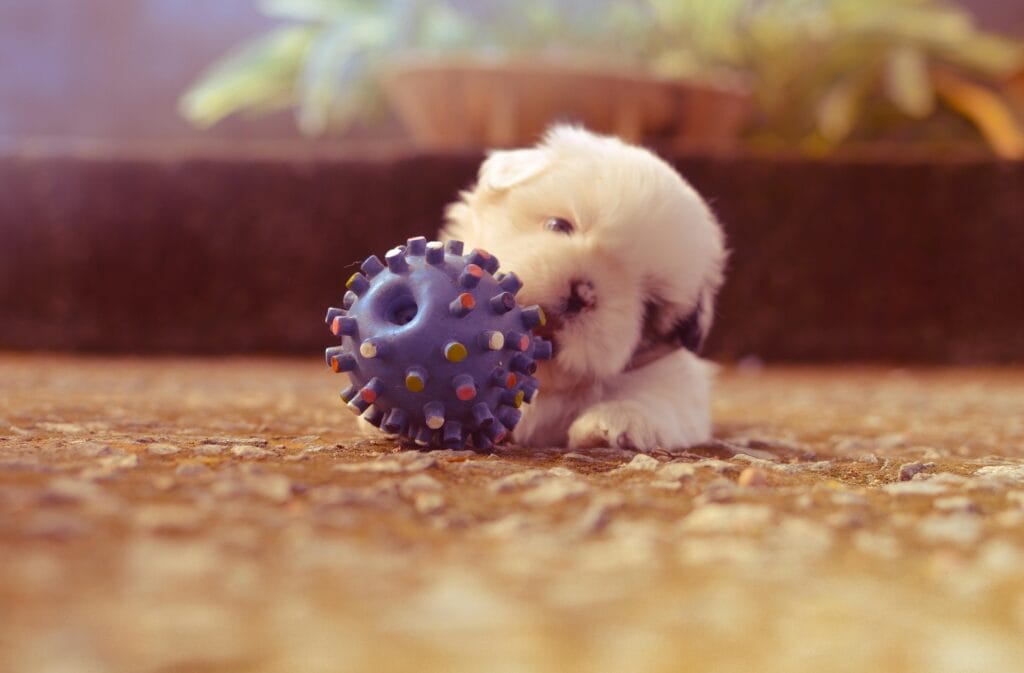
Durable Rubber Chew Toy
A durable rubber chew toy is one of the most useful toys for puppies.
Benefits include:
- satisfying natural chewing instincts
- relieving teething discomfort
- lasting longer than soft toys
These toys can also be filled with treats for added engagement.
Treat-Dispensing Puzzle Toy
Puzzle toys encourage puppies to work for their treats.
Benefits include:
- mental stimulation
- slower eating habits
- reduced boredom when alone
These toys are especially helpful for energetic puppies.
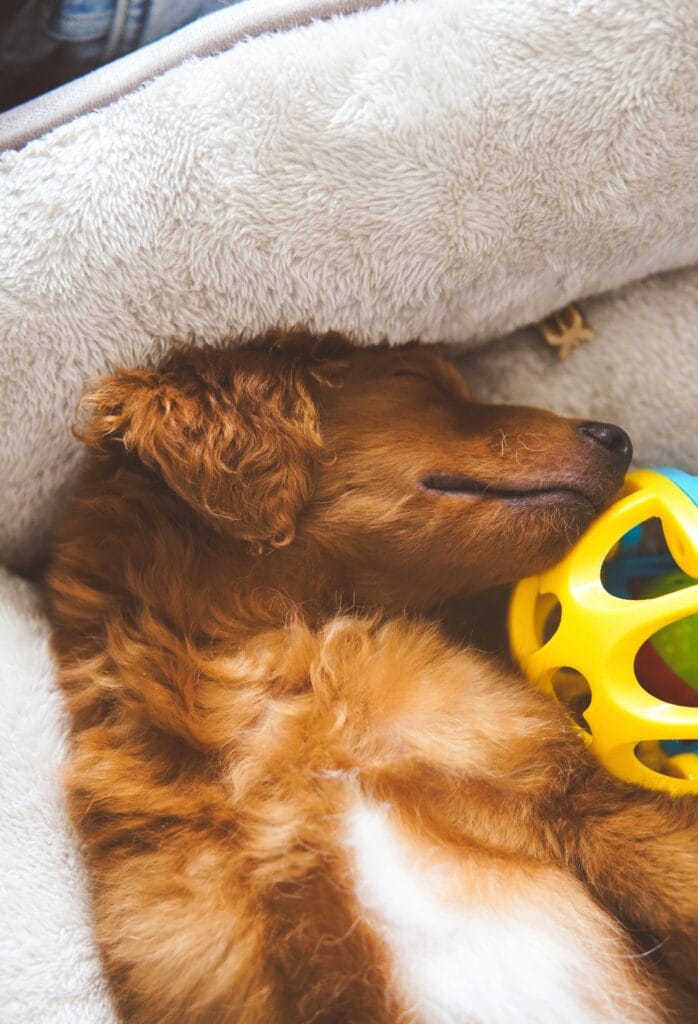
Soft Comfort Toy
Some puppies enjoy having a soft toy to cuddle with.
Benefits include:
- comfort during rest
- reduced anxiety
- gentle playtime
Soft toys should be durable and free of small detachable parts.
Practical Tips for Safe Puppy Playtime
Providing toys is only part of the solution. Safe play habits are equally important.
Supervise New Toys
Whenever you introduce a new toy, watch your puppy closely.
Some puppies may:
- chew aggressively
- tear apart soft toys
- swallow small pieces
Supervision helps ensure toys remain safe.
Encourage Healthy Chewing
If your puppy begins chewing something inappropriate, calmly redirect them to an approved toy.
Consistency teaches puppies what they are allowed to chew.
Combine Toys With Training
Toys can also be useful training tools.
Use toys to:
- reward good behavior
- encourage recall during play
- strengthen the bond with your puppy
Play-based training keeps puppies engaged and motivated.
Common Mistakes When Choosing Puppy Toys
Avoiding these mistakes can help prevent safety issues and keep your puppy happy.
Choosing Toys That Are Too Fragile
Cheap or poorly made toys may break quickly.
Broken pieces can become choking hazards.
Investing in durable toys is safer and more cost-effective.
Giving Too Many Toys at Once
Too many toys can overwhelm puppies and reduce excitement.
Rotating toys helps maintain interest.
Ignoring Toy Condition
Even durable toys eventually wear out.
Regularly inspect toys for:
- cracks
- loose parts
- sharp edges
Replace damaged toys immediately.
Selecting Toys Only for Entertainment
Some toys are purely decorative and don’t provide mental stimulation.
Puppies benefit most from toys that encourage chewing, problem-solving, and movement.
Conclusion
Learning how to choose the right puppy toys helps create a safer and more enjoyable environment for your new dog. Toys are not just playthings—they support healthy development, relieve teething discomfort, and prevent destructive behavior.
By choosing durable toys, selecting the correct size, and providing a mix of chew toys and interactive puzzles, you can help your puppy stay mentally and physically stimulated.
With the right toys and safe play habits, your puppy can enjoy fun, engaging playtime while developing important skills that support a happy and healthy life.
FAQ
What toys are best for teething puppies?
Durable rubber chew toys and soft teething toys are excellent for soothing sore gums.
How many toys should a puppy have?
Most puppies do well with 3–5 toys available at a time, with additional toys rotated regularly.
Are rope toys safe for puppies?
Rope toys can be safe if supervised, but damaged ropes should be replaced to prevent swallowing fibers.
How often should puppy toys be replaced?
Toys should be replaced whenever they show signs of damage such as cracks, loose pieces, or excessive wear.
Can puppies have plush toys?
Yes, but choose durable plush toys designed for dogs and supervise playtime to prevent tearing.
You may also like: