How to Bathe a Dog Properly
Bathing your dog is an important part of grooming and overall health. If you’re wondering how to bathe a dog properly, you’re not alone. Many dog owners worry about doing something wrong, such as using the wrong shampoo, getting water in the ears, or making the experience stressful for their pet.
While some dogs love water, others may feel nervous during bath time. The key to successful dog bathing is preparation, patience, and using the right techniques. When done correctly, bathing helps remove dirt, loose fur, allergens, and odors while keeping your dog’s skin and coat healthy.
In this guide, you’ll learn:
- how to bathe a dog properly step by step
- how often dogs should be bathed
- practical tips for stress-free bath time
- common bathing mistakes to avoid
- helpful products that make bathing easier
With the right approach, bath time can become a simple and comfortable part of your dog’s grooming routine.
Disclosure: As Amazon Associates, we earn from qualifying purchases at no extra cost to you.
Why Regular Dog Bathing Matters
Before learning how to bathe a dog properly, it helps to understand why bathing is important.
Dogs naturally pick up dirt, bacteria, and oils from their environment. Over time, these can accumulate in their coat and skin.
Regular bathing helps:
- remove dirt and debris
- reduce odor
- prevent skin irritation
- keep the coat shiny and healthy
- remove loose fur
However, bathing too often can strip natural oils from the skin.
Most dogs only need a bath every 4–6 weeks, though this can vary depending on breed, coat type, and activity level.
Preparing for Your Dog’s Bath
Preparation can make bath time much easier for both you and your dog.
Before starting the bath:
- brush your dog’s coat to remove loose hair
- gather all bathing supplies
- prepare towels for drying
- choose a calm location
Preparing everything in advance helps the process go smoothly.
How to Bathe a Dog Properly (Step-by-Step Guide)
Learning how to bathe a dog properly is simple when you follow a clear and gentle process.
Step 1: Brush Your Dog Before Bathing
Brushing your dog’s coat before the bath helps remove:
- loose fur
- dirt
- tangles
Bathing a tangled coat can make mats worse.
Brushing also helps water and shampoo reach the skin more easily.
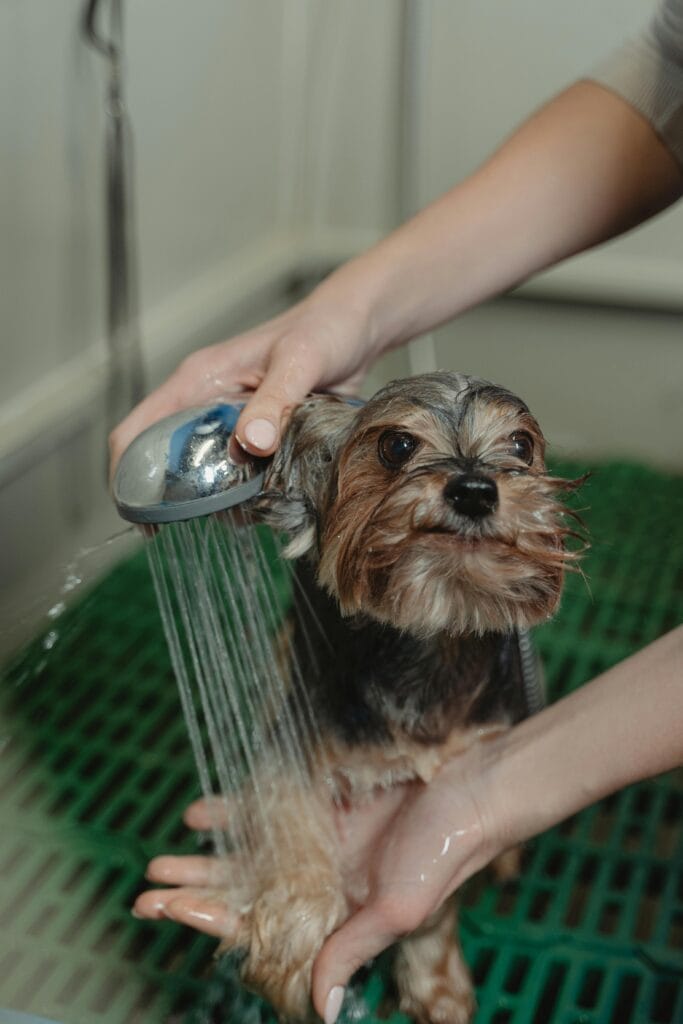
Step 2: Use Lukewarm Water
Dogs are sensitive to temperature.
Always use lukewarm water, never hot water.
Hot water can irritate your dog’s skin, while cold water may make them uncomfortable.
Begin by gently wetting the dog’s coat from the neck down.
Avoid spraying water directly into the face or ears.
Step 3: Apply Dog Shampoo
Use a shampoo specifically formulated for dogs.
Apply a small amount of shampoo and gently massage it into the coat.
Focus on areas that collect dirt, such as:
- paws
- belly
- tail
- underarms
Use gentle circular motions to distribute the shampoo evenly.
Avoid getting shampoo in the dog’s eyes, nose, or ears.
Step 4: Rinse Thoroughly
One of the most important steps when learning how to bathe a dog properly is rinsing.
Leftover shampoo can irritate the skin.
Rinse until:
- water runs clear
- no soap residue remains
Pay special attention to thicker areas of the coat where shampoo can hide.
Step 5: Dry Your Dog Carefully
After the bath, gently squeeze excess water from your dog’s coat.
Use a clean towel to dry your dog thoroughly.
Some dogs may also tolerate a hair dryer on a low heat setting.
Make sure to:
- keep the dryer at a safe distance
- avoid overheating the skin
- allow your dog breaks if needed

Helpful Products for Dog Bath Time
This article contains affiliate links. As an Amazon Associate, we earn from qualifying purchases.
Using the right grooming tools can make bathing easier and more comfortable for your dog.
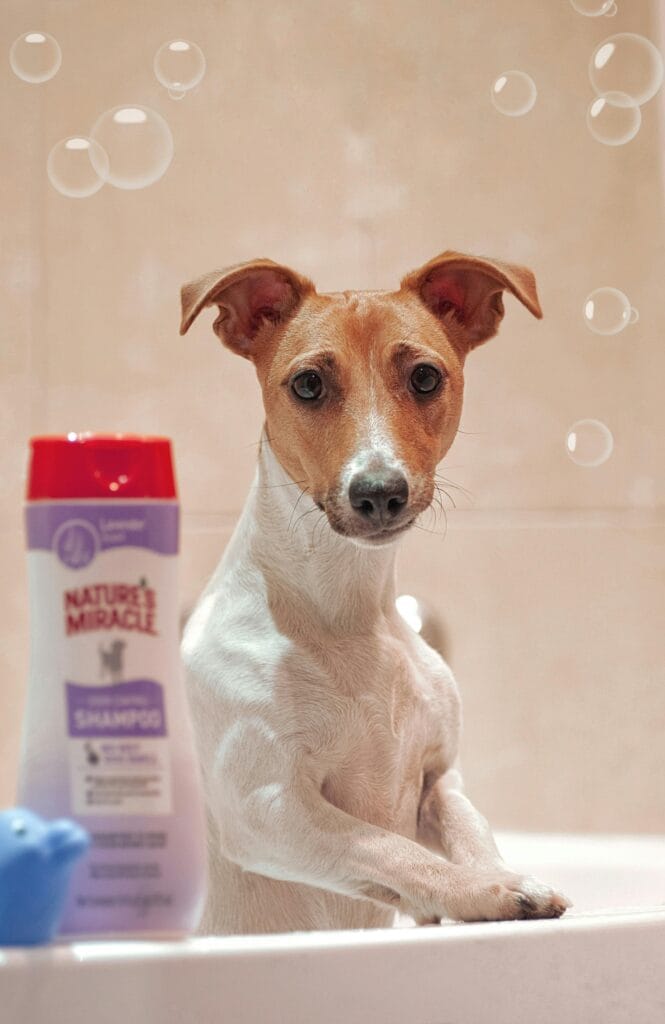
Dog Shampoo
A high-quality dog shampoo helps clean your dog’s coat while protecting their skin.
Look for formulas designed for:
- sensitive skin
- odor control
- moisturizing coats
Dog shampoos are specially balanced for canine skin.
Non-Slip Bath Mat
A non-slip bath mat prevents dogs from slipping during the bath.
Benefits include:
- increased safety
- reduced anxiety
- better stability during washing
Dogs often feel calmer when they have secure footing.
Grooming Brush
A dog grooming brush helps remove loose hair and prevent tangles before bathing.
Regular brushing also improves coat health between baths.
Practical Tips for Stress-Free Dog Bathing
These simple tips can help bath time go smoothly.
Start Bath Training Early
Puppies adapt to grooming routines more easily.
Introducing baths early helps dogs become comfortable with water and handling.
Use Calm Encouragement
Speak gently to your dog during the bath.
Calm praise and occasional treats help create positive associations.
Protect the Ears
Water entering the ears can cause discomfort or infection.
Avoid spraying water near the ear canal.
Keep Bath Time Short
Long baths can make dogs restless.
Efficient bathing keeps the experience positive.
Common Dog Bathing Mistakes
Avoiding these mistakes helps protect your dog’s skin and comfort.
Using Human Shampoo
Human shampoos can disrupt a dog’s skin pH balance.
Always use dog-specific shampoo.
Bathing Too Frequently
Frequent baths can dry out your dog’s skin and coat.
Follow a reasonable bathing schedule.
Skipping Brushing Before Bathing
Tangles become harder to manage when wet.
Always brush first.
Rushing the Process
Dogs may become anxious if bath time feels chaotic.
Slow, calm handling helps keep your dog relaxed.
Conclusion
Learning how to bathe a dog properly is an essential skill for maintaining your dog’s hygiene and overall health. With proper preparation, gentle handling, and the right grooming tools, bath time can become a comfortable experience for both you and your dog.
By brushing before bathing, using lukewarm water, rinsing thoroughly, and drying carefully, you can keep your dog’s coat clean and healthy without causing stress.
Consistent grooming routines help prevent skin issues, reduce odor, and keep your dog feeling fresh and comfortable.
With patience and practice, bath time can become a simple and positive part of caring for your dog.
FAQ
How often should I bathe my dog?
Most dogs only need a bath every 4–6 weeks, though active or long-haired breeds may require more frequent bathing.
Can I use human shampoo on my dog?
No. Human shampoos can irritate a dog’s skin and disrupt their natural pH balance.
What if my dog hates baths?
Introduce bath time gradually, use calm encouragement, and offer treats to build positive associations.
Should I dry my dog after a bath?
Yes. Drying helps prevent chills and skin irritation, especially for dogs with thick coats.
Is it safe to use a hair dryer on dogs?
Yes, if used on a low heat setting and kept at a safe distance from the dog’s skin.
You may also like: