Why Do Dogs Lick People?
If you’ve ever owned a dog, you’ve probably experienced an enthusiastic lick on your hands, face, or feet. Many owners wonder why do dogs lick people and whether this behavior means affection, communication, or something else entirely.
Licking is a natural behavior for dogs and plays an important role in canine communication. Dogs may lick people for several different reasons, including affection, curiosity, attention seeking, or even instinctive habits learned during puppyhood.
While licking is often harmless and even comforting for some dog owners, understanding the meaning behind it can help you interpret what your dog is trying to communicate.
In this guide, we’ll explore:
- why dogs lick people
- what different licking behaviors may mean
- possible causes behind the behavior
- when licking may become excessive
- how dog owners can respond appropriately
By understanding this behavior, dog owners can strengthen their bond with their pets and better respond to their needs.
Disclosure: As Amazon Associates, we earn from qualifying purchases at no extra cost to you.
Why Do Dogs Lick People?
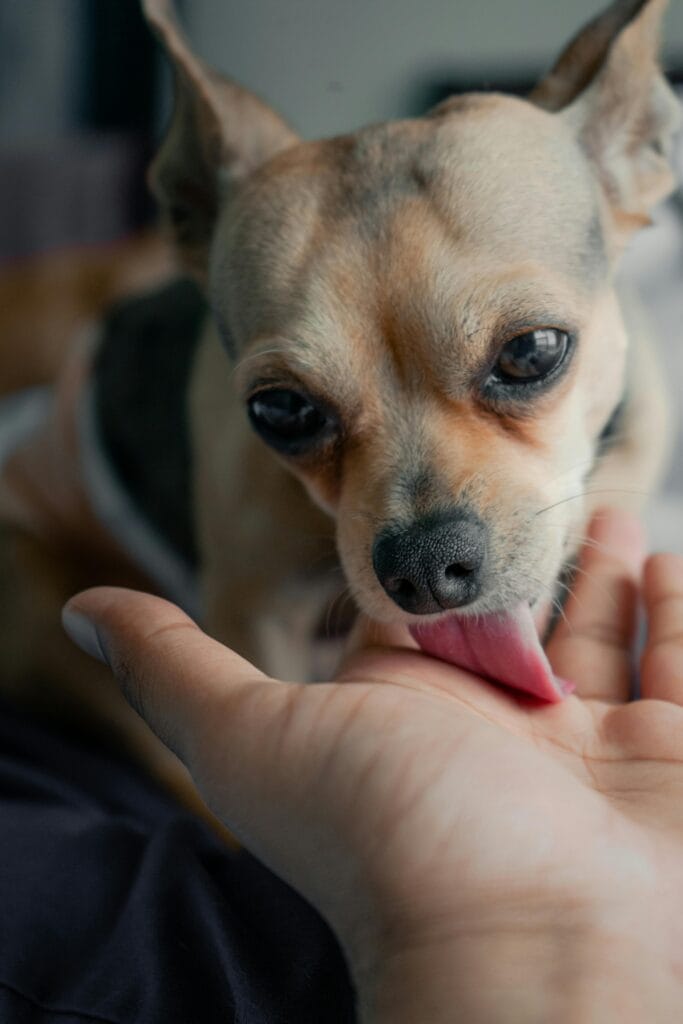
To understand why dogs lick people, it helps to look at how licking functions in the natural social behavior of dogs.
Licking begins early in a dog’s life. Puppies lick their mothers to stimulate feeding and bonding. Adult dogs also lick one another as part of social interaction within a group.
Because dogs view humans as part of their social group, they often use licking as a way to communicate with their owners.
Dogs may lick people to express:
- affection
- curiosity
- submission
- attention seeking
- comfort seeking
The meaning behind the licking usually depends on the context and the dog’s body language.
Common Types of Dog Licking Behavior
Dogs may lick people in different ways depending on their emotional state.
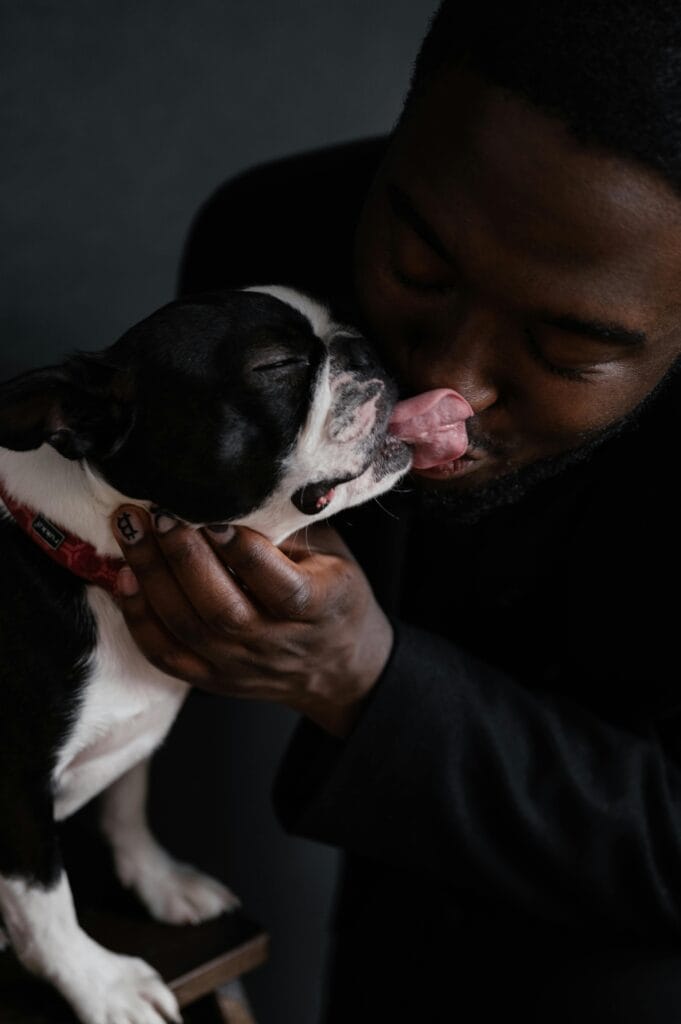
Affectionate Licking
One of the most common reasons dogs lick people is to show affection.
Dogs may lick when:
- greeting their owners
- cuddling or relaxing
- seeking closeness
Many dogs learn that licking often results in positive attention from humans.
This type of licking is usually gentle and paired with relaxed body language.

Attention-Seeking Licking
Dogs quickly learn which behaviors get their owner’s attention.
If licking results in:
- talking to the dog
- petting
- laughter
the dog may repeat the behavior to gain attention.
This type of licking often occurs when a dog wants interaction.
Curiosity or Taste
Dogs explore the world with their noses and mouths.
Sometimes dogs lick people simply because:
- skin may have salty residue from sweat
- food smells remain on hands
- lotions or creams have appealing scents
In these cases, licking may be motivated by curiosity rather than emotion.
Comfort-Seeking Behavior
Dogs may lick their owners when they feel anxious or uncertain.
Licking can release calming chemicals in a dog’s brain and help them feel more secure.
Some dogs lick more frequently during stressful situations such as:
- loud noises
- unfamiliar environments
- meeting new people
Learned Behavior
Dogs are very good at learning patterns.
If licking consistently leads to positive responses from people, dogs may continue the behavior.
This reinforcement can make licking more frequent over time.
Possible Causes of Excessive Licking
Occasional licking is normal, but excessive licking may indicate an underlying issue.
Some possible causes include:
Anxiety or Stress
Dogs experiencing anxiety may lick excessively as a self-soothing behavior.
Common triggers include:
- separation anxiety
- changes in routine
- unfamiliar environments
Boredom
Dogs that lack stimulation may develop repetitive behaviors.
If a dog does not receive enough exercise or mental stimulation, licking may become a way to release energy.
Habitual Behavior
Some dogs develop strong habits around licking because it consistently produces attention.
Breaking this habit may require redirecting the dog’s behavior.
Medical Issues
In rare cases, excessive licking may relate to health concerns such as skin irritation or digestive issues.
If licking becomes obsessive or sudden, consulting a veterinarian is recommended.
What Dog Owners Should Do Next
If your dog occasionally licks people, the behavior is usually harmless.
However, owners should observe:
- when the licking occurs
- how often it happens
- whether other behavioral signs are present
Understanding the context helps determine whether the behavior is simply affectionate or part of a larger issue.
If licking becomes excessive or disruptive, training and enrichment activities can help redirect the behavior.
Helpful Tips for Managing Licking Behavior
These simple strategies can help maintain healthy dog behavior.
Encourage Alternative Behaviors
If your dog licks excessively for attention, redirect them toward another activity.
Examples include:
- sitting calmly
- playing with toys
- performing a command
Reward the alternative behavior instead of the licking.
Provide Mental Stimulation
Mental enrichment helps reduce boredom-related behaviors.
Activities such as training sessions and puzzle toys keep dogs engaged.
Avoid Reinforcing Unwanted Licking
If you want to reduce licking, avoid reacting strongly when it happens.
Calmly redirect your dog instead.
Maintain Consistent Routines
Dogs thrive on predictable routines.
Regular exercise and interaction help prevent stress-related behaviors.
Helpful Products for Enrichment and Training
This article contains affiliate links. As an Amazon Associate, we earn from qualifying purchases.
Some enrichment tools can help redirect licking behavior into healthier activities.
Dog Puzzle Toy
Puzzle toys provide mental stimulation and reduce boredom.
Benefits include:
- encouraging problem-solving
- keeping dogs engaged
- reducing repetitive behaviors
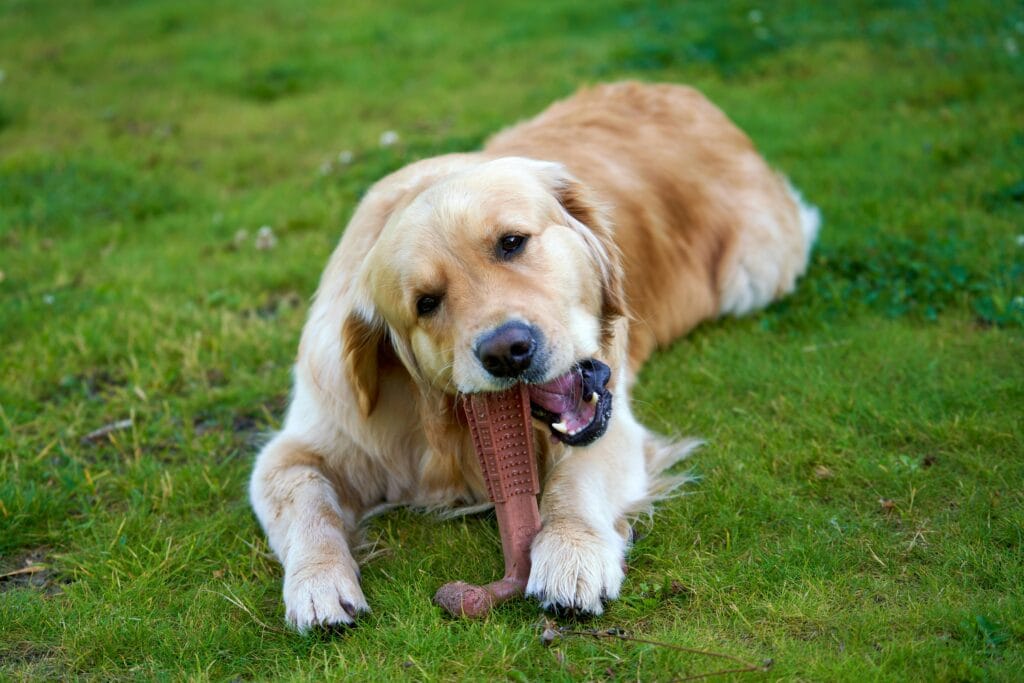
Durable Chew Toy
Chew toys provide an appropriate outlet for oral activity.
Benefits include:
- relieving stress
- supporting dental health
- redirecting licking behavior
Training Treats
Small training treats can reinforce calm behaviors during training sessions.
Benefits include:
- supporting positive reinforcement training
- encouraging good habits
- improving communication between dog and owner
Conclusion
Understanding why dogs lick people helps dog owners interpret their pets’ communication more clearly. Licking is a natural social behavior that often reflects affection, curiosity, attention seeking, or comfort.
In most situations, occasional licking is harmless and simply part of how dogs interact with their human companions.
However, excessive licking may sometimes indicate boredom, anxiety, or learned habits that can be improved through training and enrichment.
By observing context, body language, and frequency of the behavior, owners can better understand their dog’s needs and respond in supportive ways.
With patience and proper guidance, licking becomes just another part of the unique language dogs use to communicate with the people they love.
FAQ
Is it normal for dogs to lick their owners?
Yes. Licking is a natural behavior that often shows affection or social bonding.
Why does my dog lick my face?
Dogs may lick faces as a greeting behavior or to show affection.
Can dog licking mean anxiety?
Sometimes. Dogs may lick excessively when they feel stressed or uncertain.
Should I stop my dog from licking people?
Occasional licking is usually harmless, but excessive licking can be redirected through training.
Why do dogs lick salty skin?
Dogs may be attracted to the salty taste of human sweat on skin.
You may also like: