
How to Prevent Separation Anxiety in Puppies
Many new dog owners worry about leaving their puppy alone for the first time. If you’re wondering how to prevent separation anxiety in puppies, you’re asking an important question that can help shape your puppy’s long-term behavior and emotional well-being.
Separation anxiety occurs when dogs become extremely distressed when their owners leave. Puppies may bark, whine, chew furniture, or pace anxiously when left alone. While this behavior is common during early development, it can become a serious problem if not addressed properly.
The good news is that separation anxiety can often be prevented with the right training approach and daily habits. By teaching your puppy independence gradually and building positive associations with alone time, you can help them feel safe and relaxed even when you’re not home.
In this guide, you’ll learn:
- why separation anxiety happens in puppies
- how to prevent separation anxiety in puppies step by step
- practical tips to encourage independence
- common mistakes owners make
- helpful tools that support calm behavior
With patience and consistency, most puppies learn to stay calm when left alone.
Disclosure: As Amazon Associates, we earn from qualifying purchases at no extra cost to you.
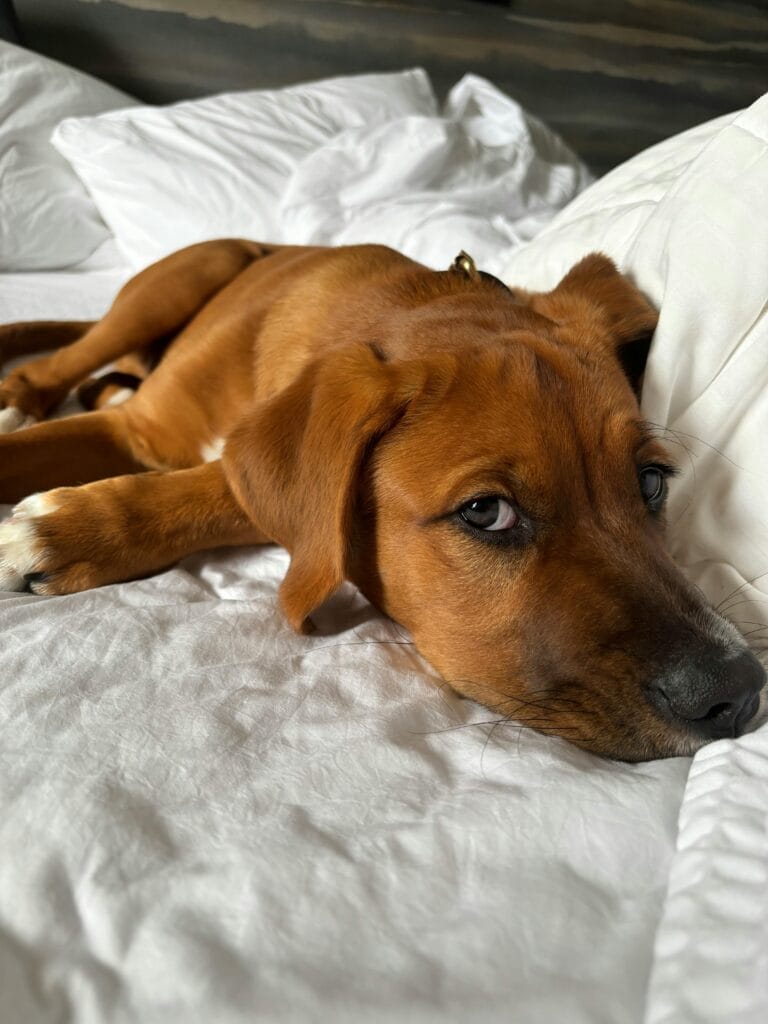
Why Puppies Develop Separation Anxiety
Before learning how to prevent separation anxiety in puppies, it’s helpful to understand why it happens.
Puppies are naturally social animals. In their early weeks of life, they are constantly surrounded by their mother and littermates. Moving into a new home can feel overwhelming because they suddenly experience periods of being alone.
Common causes of separation anxiety include:
- sudden long periods of isolation
- lack of independence training
- overly emotional greetings and departures
- inconsistent routines
- boredom or lack of stimulation
The goal of training is to teach your puppy that being alone is normal and safe.
How to Prevent Separation Anxiety in Puppies
Learning how to prevent separation anxiety in puppies involves gradually building independence and helping your puppy feel comfortable when you are not around.
Follow these steps to create positive alone-time experiences.
Step 1: Start With Short Alone Time
Begin by leaving your puppy alone for very short periods.
Start with:
- stepping into another room for a few minutes
- briefly leaving the house
- gradually increasing the time away
Short practice sessions help puppies understand that you always return.
Gradual exposure prevents anxiety from developing.
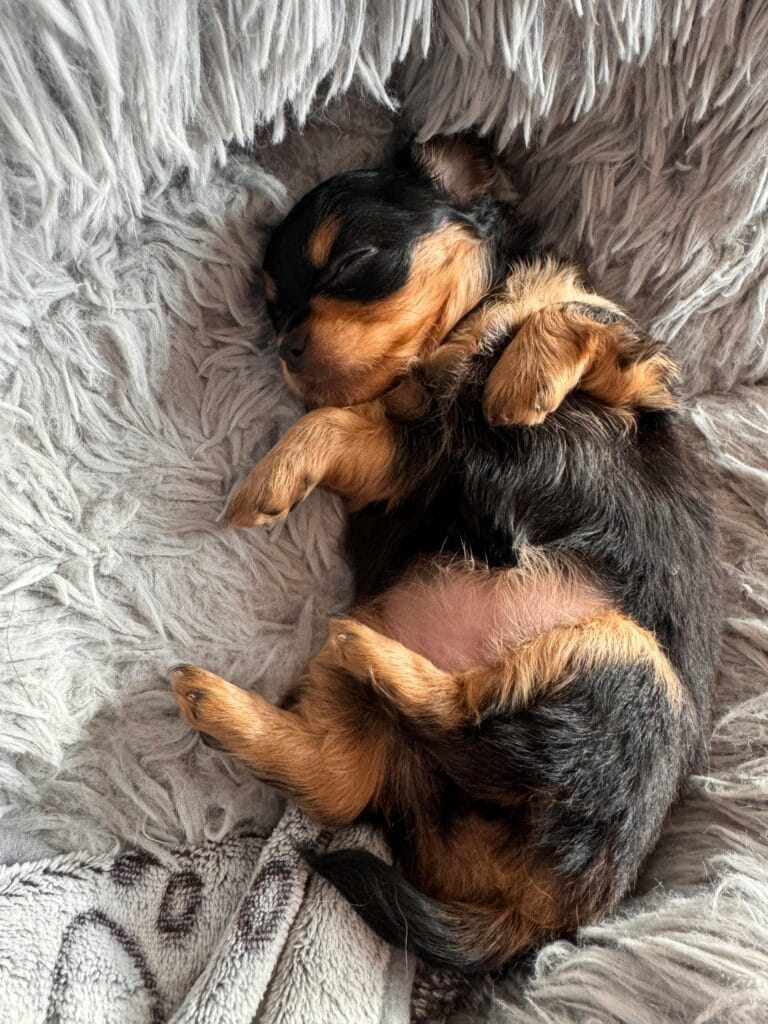
Step 2: Create a Safe and Comfortable Space
Your puppy should have a designated place where they feel secure when alone.
This space might include:
- a crate
- a comfortable dog bed
- a quiet corner of the home
A familiar environment helps reduce stress when owners leave.
Step 3: Avoid Emotional Departures
Many owners accidentally create anxiety by making a big event out of leaving.
Try to keep departures calm:
- avoid long goodbyes
- avoid excited voices
- simply leave quietly
This teaches your puppy that leaving the house is a normal part of daily life.
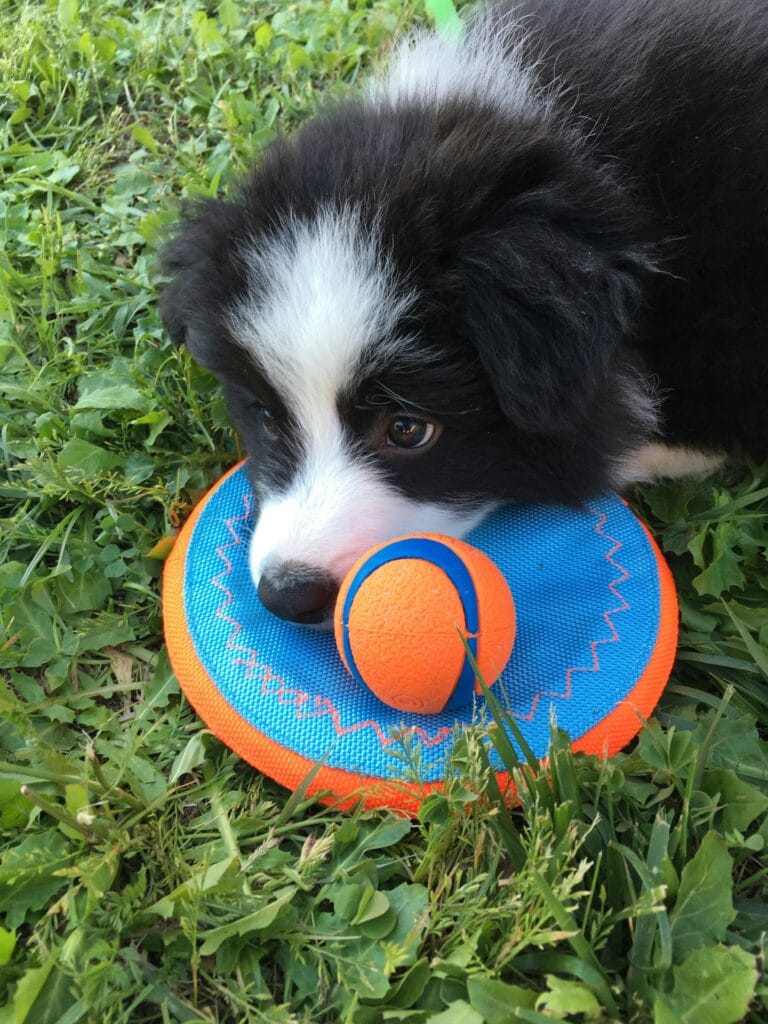
Step 4: Practice Independent Play
Encourage your puppy to spend time playing alone.
Provide:
- chew toys
- puzzle toys
- interactive treats
Independent play builds confidence and helps puppies learn to entertain themselves.
Step 5: Return Calmly
When you return home, avoid overly excited greetings.
Instead:
- wait until your puppy is calm
- greet them gently
- reward relaxed behavior
This prevents reinforcing anxious excitement.
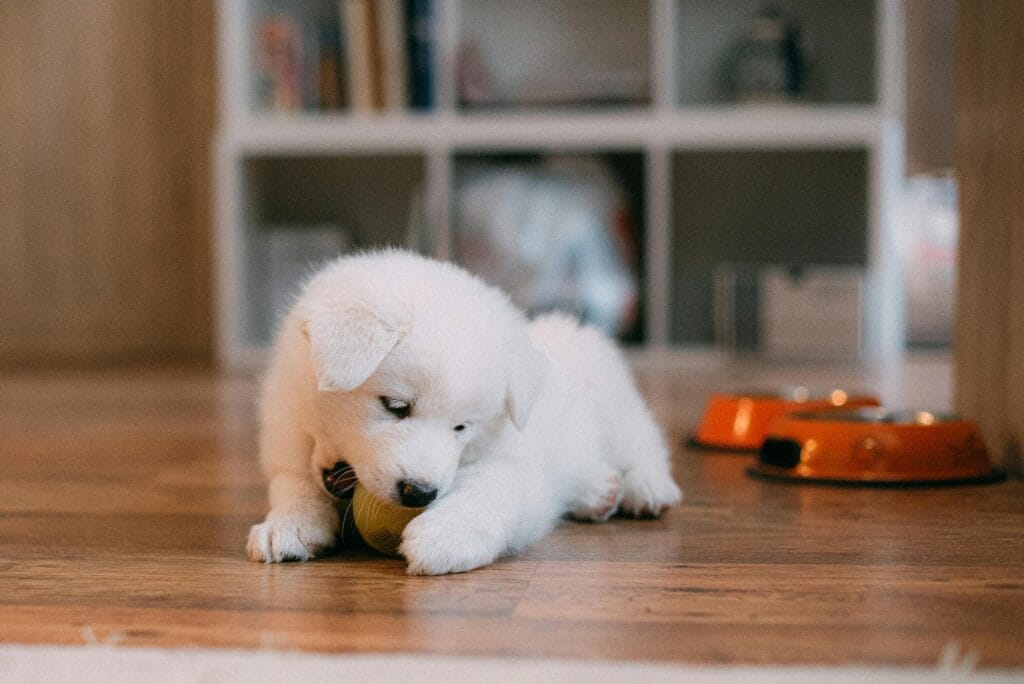
Helpful Tools That Support Calm Behavior
This article contains affiliate links. As an Amazon Associate, we earn from qualifying purchases.
While training habits are the most important factor, certain tools can help puppies feel more comfortable when alone.
Calming Dog Bed
A calming dog bed can help reduce stress and promote relaxation.
These beds often feature soft materials and raised edges that create a cozy sleeping environment.
Benefits include:
- encouraging restful sleep
- reducing anxiety
- providing a safe resting spot
Interactive Puzzle Toys
Puzzle toys keep puppies mentally engaged while their owners are away.
Benefits include:
- reducing boredom
- providing mental stimulation
- redirecting energy toward problem-solving
These toys are especially helpful for active or curious puppies.
Puppy Crate
A properly introduced crate can become a safe space for a puppy when alone.
Benefits include:
- preventing destructive behavior
- creating a secure sleeping area
- supporting house training
Crates should always be associated with positive experiences.
Practical Tips for Preventing Separation Anxiety
These small habits can make a big difference in your puppy’s emotional development.
Maintain a Consistent Daily Routine
Dogs feel more secure when their day follows predictable patterns.
Try to keep regular times for:
- meals
- walks
- training
- rest
Predictable schedules reduce uncertainty and stress.
Provide Enough Exercise
A tired puppy is much more relaxed when left alone.
Daily physical activity helps prevent:
- destructive chewing
- excessive barking
- anxious pacing
Exercise should be age-appropriate and balanced with rest.
Introduce Alone Time Early
Many owners wait too long before leaving their puppy alone.
Short early experiences help puppies learn independence before anxiety develops.
Common Mistakes That Cause Separation Anxiety
Avoiding these mistakes can help prevent long-term behavioral problems.
Leaving Puppies Alone Too Long
Young puppies have limited bladder control and may become distressed when left alone for extended periods.
Gradually increase alone time instead.
Over-Attachment
Constant attention without independence training can create emotional dependency.
Encourage your puppy to spend some time resting independently.
Punishing Anxiety Behavior
Punishing a puppy for whining or chewing due to anxiety can increase fear and confusion.
Positive training methods are more effective.
Inconsistent Training
If routines change frequently, puppies may struggle to understand when alone time is normal.
Consistency builds confidence.
Conclusion
Learning how to prevent separation anxiety in puppies is one of the most important steps in raising a confident and emotionally balanced dog. By gradually introducing alone time, creating a comfortable environment, and keeping daily routines consistent, you can help your puppy develop healthy independence.
Most puppies adjust well when they learn that being alone is temporary and safe. With patience, positive reinforcement, and thoughtful training, you can prevent many anxiety-related behaviors before they begin.
A puppy that feels secure when alone will grow into a calm and confident adult dog, making life easier for both you and your pet.
FAQ
At what age can puppies be left alone?
Young puppies can typically handle short periods alone at around 8–10 weeks, but time should increase gradually.
How long can a puppy stay alone?
As a general rule, puppies can hold their bladder for about one hour per month of age.
What are signs of separation anxiety in puppies?
Common signs include whining, barking, destructive chewing, pacing, and attempts to escape when left alone.
Can separation anxiety be prevented completely?
While every dog is different, early independence training greatly reduces the risk of severe separation anxiety.
Should I ignore my puppy if they cry when I leave?
Mild whining may settle on its own, but persistent distress may require gradual training and shorter practice sessions.
You may also like:
Pingback: Best Calming Treats for Dog Separation Anxiety