How to Train a Dog Using Positive Reinforcement
Training your dog doesn’t have to involve punishment or frustration. In fact, one of the most effective and humane approaches is positive reinforcement. If you’re wondering how to train a dog using positive reinforcement, the goal is simple: reward the behaviors you want to see more often.
Positive reinforcement training works because dogs naturally repeat behaviors that lead to good outcomes—like treats, praise, or playtime. Instead of focusing on what your dog is doing wrong, you guide them toward the right behavior and reward it.
This method not only helps dogs learn faster but also strengthens the bond between you and your pet. Whether you’re teaching basic commands, correcting unwanted habits, or raising a new puppy, positive reinforcement is a powerful and gentle training approach.
In this guide, you’ll learn step-by-step how to use positive reinforcement effectively, avoid common mistakes, and create training sessions your dog will enjoy.
What Is Positive Reinforcement Dog Training?
Positive reinforcement means rewarding a dog immediately after they perform a desired behavior. The reward encourages them to repeat that behavior in the future.
Common rewards include:
- Treats
- Verbal praise
- Toys
- Playtime
- Petting
For example:
If your dog sits when you ask and you immediately give them a treat, they learn:
“Sitting = good things happen.”
Over time, your dog begins to respond reliably because they expect a positive outcome.
Disclosure: As Amazon Associates, we earn from qualifying purchases at no extra cost to you.
Why Positive Reinforcement Works So Well
Positive reinforcement training is widely recommended by veterinarians, trainers, and animal behaviorists.
Benefits include:
Builds trust
Your dog associates training with positive experiences rather than fear.
Encourages faster learning
Dogs quickly repeat behaviors that result in rewards.
Reduces anxiety
Punishment-based training can increase fear and stress.
Strengthens your bond
Training becomes a fun activity instead of a stressful one.
Because of these benefits, positive reinforcement is considered the most effective training method for modern dog training.
Step-by-Step: How to Train a Dog Using Positive Reinforcement
Step 1: Choose High-Value Rewards
Not all rewards are equal.
Your dog will respond better when the reward is something they truly love.
Common training rewards:
- Small training treats
- Pieces of cooked chicken
- Cheese bits
- Favorite toys
Use small treats so you can reward frequently without overfeeding.
Step 2: Start With Simple Commands
Begin with easy behaviors your dog can understand quickly.
Good starter commands include:
- Sit
- Come
- Stay
- Down
- Leave it
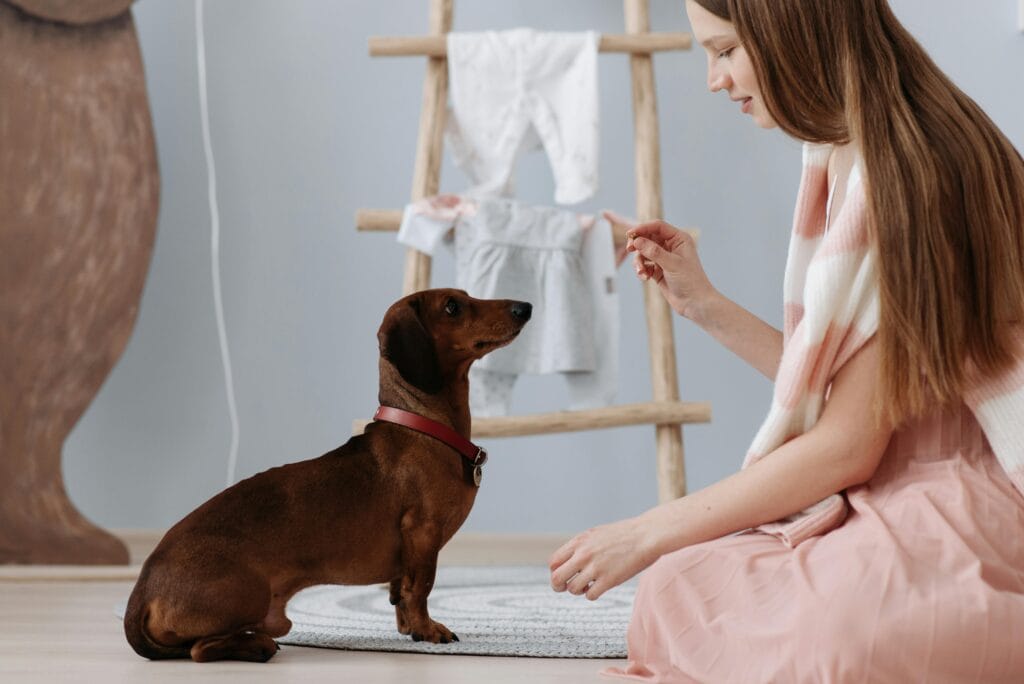
Example training process for sit:
- Hold a treat near your dog’s nose
- Slowly move it upward
- As their head follows the treat, their bottom lowers
- The moment they sit, say “Yes!” and reward
Repeat this several times until the behavior becomes consistent.
Step 3: Reward Immediately
Timing is critical.
The reward must come within 1–2 seconds after the behavior.
If you wait too long, your dog may associate the reward with something else.
For example:
Correct timing:
Dog sits → treat immediately
Incorrect timing:
Dog sits → 5 seconds later → treat
The dog may think standing up earned the reward.
Step 4: Use a Marker Word or Clicker
Many trainers use a marker to signal the exact moment a dog performs the correct behavior.
Common markers include:
- “Yes!”
- “Good!”
- Clicker sound
Marker training works like this:
- Dog performs correct behavior
- Marker word or click
- Reward
This helps dogs understand exactly what behavior earned the reward.
Step 5: Keep Training Sessions Short
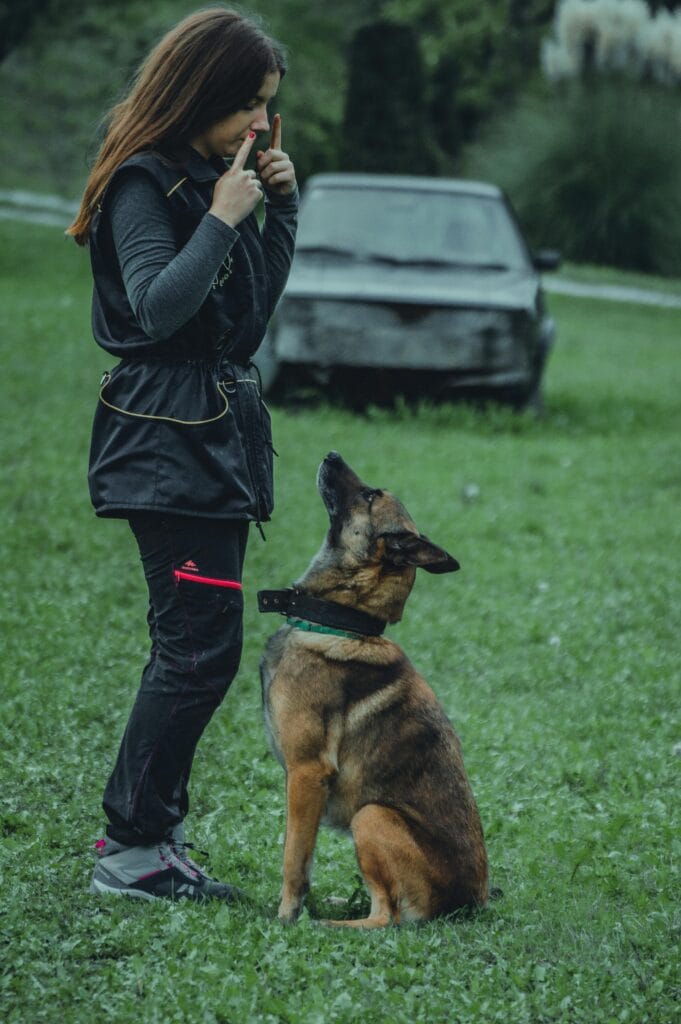
Dogs learn best in short, focused sessions.
Recommended session length:
- 5–10 minutes
- 2–3 sessions per day
Long sessions can cause:
- frustration
- boredom
- loss of focus
Short sessions keep training fun and productive.
Step 6: Gradually Reduce Treats
Once your dog understands a command, you don’t need to reward every single time.
Instead:
- reward randomly
- continue verbal praise
This helps the behavior stay reliable without constant treats.
Helpful Tools for Positive Reinforcement Training
This article contains affiliate links. As an Amazon Associate, we earn from qualifying purchases.
Certain training tools can make positive reinforcement training easier and more effective.
Dog Training Clicker
A training clicker helps mark the exact moment your dog performs the correct behavior.
Many trainers prefer clickers because they produce a consistent sound every time.
Recommended option:
Karen Pryor Clicker Training for Dogs
Benefits:
- clear training signal
- inexpensive
- easy for beginners
- improves timing
Treat Pouch for Training
A treat pouch allows quick access to rewards during training.
Benefits include:
- faster reward timing
- hands-free convenience
- organized training sessions
Recommended product:
PetSafe Dog Treat Training Pouch
This makes training sessions smoother and more consistent.
Interactive Training Toys
Mental stimulation helps reinforce positive behaviors.
Puzzle toys reward dogs when they solve challenges, encouraging problem-solving.
Recommended product:
Outward Hound Nina Ottosson Puzzle Toy
Great for:
- mental enrichment
- reducing boredom
- reinforcing positive learning.
Practical Tips for Successful Training
Training success often depends on small details.
Be consistent
Everyone in the household should use the same commands.
Example:
Use “Down” instead of switching between:
- down
- lie down
- lay down
Consistency prevents confusion.
Train in a quiet environment first
Start training where there are fewer distractions.
Good starting locations:
- living room
- backyard
- quiet park
Once your dog understands the command, gradually introduce distractions.
End sessions on a positive note
Always finish training with success.
If your dog performs the command correctly:
- reward
- praise
- end the session
This keeps training enjoyable.
Common Mistakes to Avoid
Even with positive reinforcement, some mistakes can slow progress.
Rewarding too late
If the reward comes too late, your dog may associate it with the wrong behavior.
Training when your dog is distracted
Training during high distractions can make learning difficult.
Start simple and increase difficulty gradually.
Overusing treats
Treats are helpful but should eventually become less frequent.
Balance treats with:
- praise
- play
- affection.
Getting frustrated
Dogs learn at different speeds.
Patience is essential for successful training.
When Positive Reinforcement Works Best
Positive reinforcement works particularly well for:
- puppy training
- obedience commands
- leash training
- recall training
- behavioral shaping
It can also help with:
- anxiety
- fear-based behaviors
- building confidence.
Because it avoids punishment, dogs remain more relaxed and receptive during training.
Conclusion
Learning how to train a dog using positive reinforcement can transform the way you communicate with your pet. By rewarding good behavior instead of punishing mistakes, you help your dog learn faster while building trust and confidence.
The key to success is consistency, good timing, and patience. Start with simple commands, use rewards your dog loves, and keep training sessions short and positive.
Over time, positive reinforcement training will create a well-behaved dog that enjoys learning and responds reliably to your guidance.
With practice, training becomes less about control and more about cooperation—helping you and your dog develop a stronger, happier relationship.
FAQ
What is positive reinforcement in dog training?
Positive reinforcement means rewarding a dog immediately after they perform a desired behavior. Rewards encourage the dog to repeat that behavior in the future.
How long does it take to train a dog using positive reinforcement?
Many basic commands can be learned in a few days with consistent practice. More complex behaviors may take several weeks of training.
Can older dogs learn with positive reinforcement?
Yes. Dogs of any age can learn using positive reinforcement. Older dogs may even respond better because the training method is gentle and motivating.
Are treats necessary for positive reinforcement training?
Treats are helpful at the beginning, but they can gradually be replaced with praise, toys, and affection as the dog learns the behavior.
Is positive reinforcement better than punishment-based training?
Most trainers and veterinarians recommend positive reinforcement because it builds trust, reduces stress, and produces long-lasting behavioral results.
You may also like: