How to Train a Puppy to Sit
Teaching your puppy basic commands is one of the most important parts of early training. If you’re wondering how to train a puppy to sit, you’re already starting with one of the easiest and most useful commands a dog can learn.
The “sit” command is often the first behavior professional trainers recommend because it helps create calm, focused behavior. A puppy that understands how to sit is easier to manage during everyday situations like greeting guests, waiting for food, or putting on a leash.
The good news is that most puppies can learn the sit command quickly when training is positive, consistent, and rewarding. In this guide, you’ll learn a simple step-by-step method to teach your puppy to sit, along with helpful tips to make training faster and easier.
Disclosure: As Amazon Associates, we earn from qualifying purchases at no extra cost to you.
Why Teaching a Puppy to Sit Is Important
Before learning how to train a puppy to sit, it’s helpful to understand why this command matters.
The sit command helps with:
- building good behavior early
- improving focus and attention
- preventing jumping on people
- teaching patience and self-control
- creating a foundation for other commands
Once your puppy understands “sit,” it becomes easier to teach commands like stay, come, and lie down.
How to Train a Puppy to Sit: Step-by-Step Guide
Training a puppy should always be positive and reward-based. Puppies learn best when training feels like a game.
Step 1: Get Your Puppy’s Attention
Start in a quiet place without distractions.
Hold a small treat close to your puppy’s nose so they focus on it.
When your puppy is paying attention, you’re ready to begin.
Step 2: Move the Treat Above the Puppy’s Head
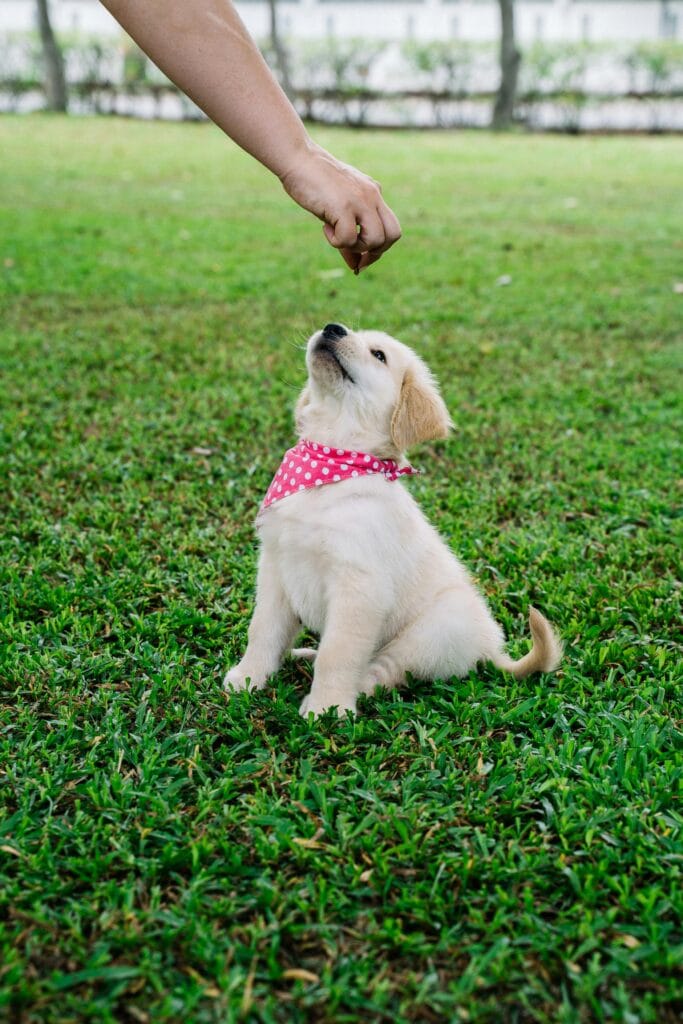
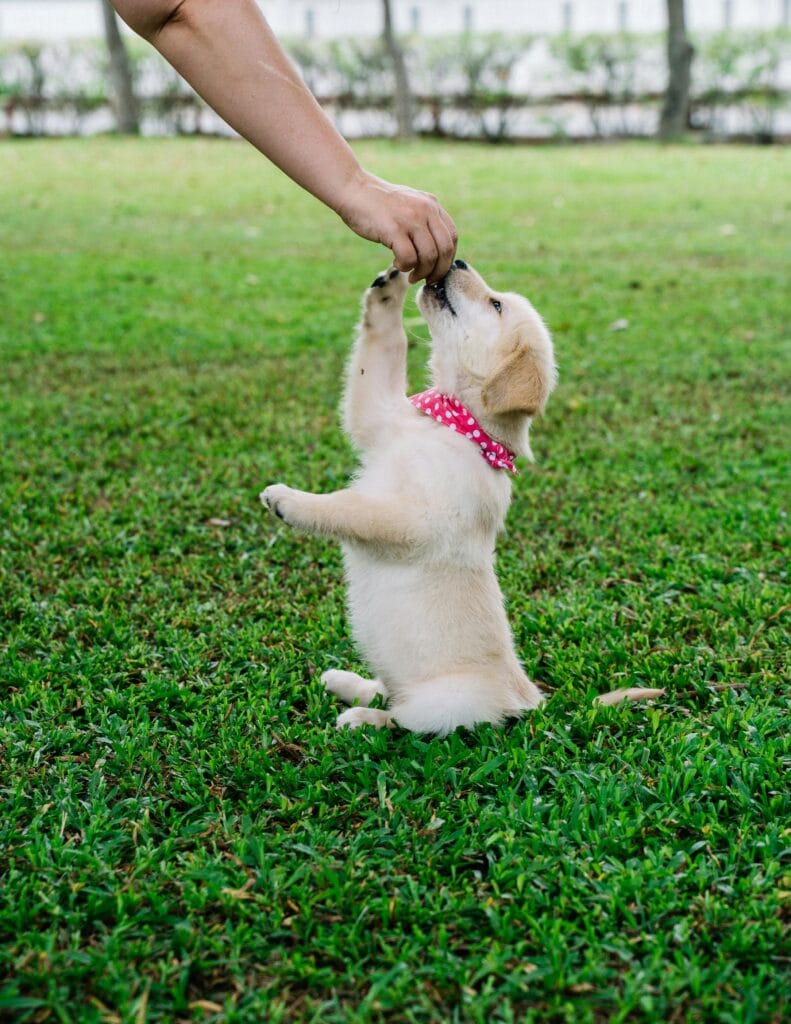
Slowly move the treat upward and slightly back over your puppy’s head.
Most puppies will naturally lower their back end to the ground while looking up at the treat.
The moment their bottom touches the ground, say:
Sit
Then immediately reward them.
Timing is important. Reward your puppy as soon as they sit.
Step 3: Reward Immediately
Once your puppy sits:
- praise them warmly
- give the treat
- show excitement
Positive reinforcement helps puppies understand that sitting leads to good things.
Step 4: Repeat Several Short Sessions
Puppies learn best with short training sessions.
Try:
5 minutes
2–3 times per day
Repetition helps the behavior become automatic.
Within a few days, most puppies begin sitting quickly when they see the treat.
Step 5: Add the Verbal Command
Once your puppy consistently sits when guided with the treat, begin adding the command first.
Say:
Sit
Then move the treat.
After several repetitions, your puppy will begin responding to the word alone.
Helpful Training Tools
Certain tools can make puppy training easier and more consistent.
Training Treats
Small, soft treats help reward puppies quickly during training.
Example product:
Zuke’s Mini Naturals Training Treats
These treats are small, low-calorie, and easy for puppies to chew during training sessions.
Clicker Training Tool
Some owners prefer clicker training to clearly mark good behavior.
Example product:
Karen Pryor Training Clicker
The clicker creates a clear sound that signals the puppy they did something right.
Practical Tips for Faster Puppy Training
Training puppies takes patience, but these tips can speed up the process.
Keep Training Sessions Short
Puppies have short attention spans.
Short sessions are more effective than long ones.
Use High-Value Rewards
If your puppy seems distracted, try more exciting treats.
Better rewards improve focus and motivation.
Train Before Meals
A slightly hungry puppy is usually more interested in treats and training.
Practice in Different Locations
Once your puppy learns the command indoors, practice in other places like:
- backyard
- park
- during walks
This helps puppies understand the command everywhere.
Common Mistakes When Training Puppies
Many owners accidentally slow training progress with a few common mistakes.
Repeating the Command Too Often
Saying:
sit sit sit sit
can confuse puppies.
Instead, say the command once and guide the behavior.
Training for Too Long
Long sessions can make puppies bored or frustrated.
Keep sessions fun and short.
Forgetting to Reward
Puppies need clear rewards to understand what behavior you want.
Expecting Instant Results
Learning takes repetition. Some puppies need more time than others.
When Puppies Usually Learn the Sit Command
Most puppies begin learning quickly.
Typical timeline:
Day 1–3
understanding the motion
Week 1
responding consistently
Week 2+
responding to the verbal command
Consistency is the most important factor.
Conclusion
Learning how to train a puppy to sit is one of the best first steps in building a strong training foundation. The sit command teaches puppies patience, focus, and good behavior while making everyday life easier for dog owners.
With short training sessions, positive rewards, and consistent practice, most puppies learn the sit command surprisingly fast. Remember that training should always be fun and encouraging, helping your puppy build confidence while learning new skills.
By practicing daily and rewarding success, you’ll soon have a puppy that happily sits on command and is ready to learn even more advanced behaviors.
FAQ
At what age can you start training a puppy to sit?
Most puppies can begin basic training around 8 weeks old. Short sessions with positive rewards work best.
How long does it take to teach a puppy to sit?
Many puppies begin learning the command within a few days, although consistent training may take one to two weeks.
Should I push my puppy into a sitting position?
No. Forcing a puppy into position can make training uncomfortable. Instead, guide them naturally using a treat.
How often should I train my puppy each day?
Short sessions of 5 minutes, two or three times daily, work best for young puppies.
Can older dogs learn the sit command?
Yes. Dogs of any age can learn new commands with consistent training and positive reinforcement.
You may also like: